ZZ Plant Care Guide: How to Grow Zamioculcas Zamiifolia Indoors (2026)
After growing ZZ plants across offices, low-light apartments, and sun-drenched rooms for over eight years, we have worked out exactly how this rhizome-powered survivor operates — and why the growers who kill it are almost always doing one specific thing wrong.
Quick Answer
ZZ Plant Care Guide: Water only when the soil has dried out completely (every 2–3 weeks in summer, monthly in winter), use a fast-draining cactus mix, and place in bright indirect to low indirect light. The rhizomes store water — overwatering in dense soil is the primary cause of ZZ plant death. Propagation from leaf cuttings takes 3–9 months; division is significantly faster.
Why the ZZ Plant Earns Its Reputation as the Most Resilient Houseplant
Zamioculcas zamiifolia has a reputation for surviving everything — missed waterings, dim offices, neglectful owners, forgotten corners — and that reputation is largely accurate. Over eight years of growing ZZ plants in environments ranging from nearly windowless offices to south-facing conservatories, we have found this plant to be one of the most genuinely forgiving houseplants available. It will not complain loudly the way a peace lily droops or a fiddle leaf fig drops leaves. It simply grows slowly, stays glossy, and asks for very little in return.
Understanding why the ZZ plant is so drought-tolerant changes every care decision you make. Beneath the soil, the plant stores water and energy in thick, potato-like rhizomes — swollen underground stems that function as a reservoir during dry periods. When you water a ZZ plant and then wait weeks before watering again, the plant is drawing on those rhizome reserves, not suffering. This biology is the foundation of all ZZ plant care: you can neglect it, but you cannot waterlog it.
One more thing to address before we begin: there is a persistent internet myth that ZZ plants are highly carcinogenic or poisonous enough to require gloves at all times. This claim is greatly exaggerated. ZZ plants do contain calcium oxalate crystals, which cause skin irritation on contact with sap and gastrointestinal symptoms if ingested — the same compounds found in peace lilies, philodendrons, and many other common houseplants. They are not classified as a significant cancer risk. Wash your hands after handling, keep them away from pets and children, and there is no cause for alarm.
Popular ZZ Plant Varieties
Zamioculcas Zamiifolia (Standard)
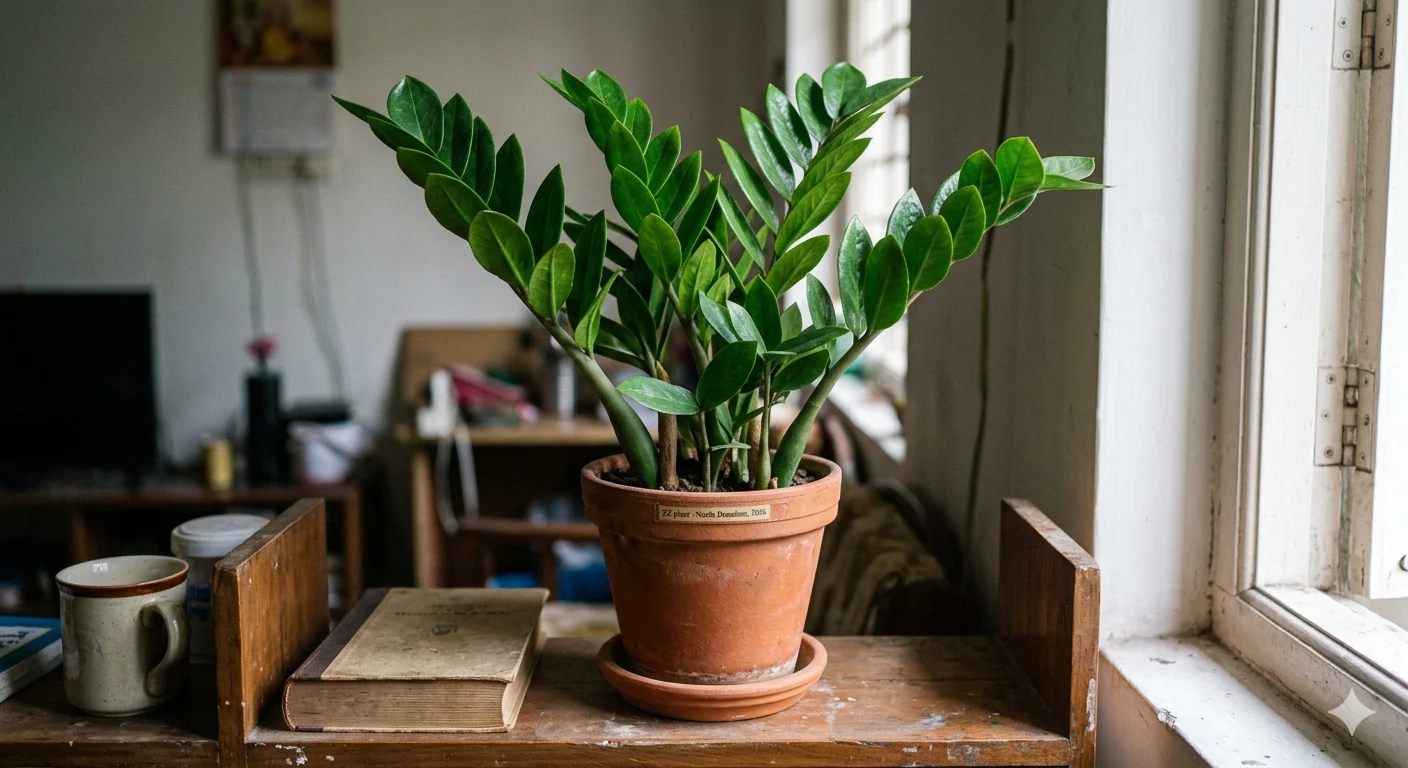
The classic form with arching stems and deeply glossy, dark green oval leaflets arranged in pairs along each stem. It is the most widely available and most forgiving variety, typically reaching 60–90 cm (2–3 feet) in height indoors. Growth is slow but steady under good conditions.
Zamioculcas Zamiifolia 'Raven'
One of the most striking houseplant releases of recent years, 'Raven' produces new growth in bright lime green that gradually deepens to a dramatic near-black purple as the leaf matures. The contrast between new and old growth on the same plant is particularly beautiful. It has identical care requirements to the standard form and is slightly slower growing.
Zamioculcas Zamiifolia 'Zamicro'
A compact dwarf cultivar that stays under 30 cm (12 inches) tall, with smaller leaflets and a denser growth habit. It is ideal for desks, shelves, and windowsills where the standard form would become too large. Care requirements are identical to the standard variety.
Zamioculcas Zamiifolia 'Lucky Classic'
A variegated cultivar with pale yellow and cream streaks across the leaf surface. It grows significantly more slowly than the standard form and requires slightly brighter light to maintain the variegation. Much rarer and more expensive than the standard variety.
Essential Care Requirements
Temperature
65–80°F (18–27°C) covers the comfortable indoor range. ZZ plants are native to dry grasslands and forest margins of eastern Africa — environments with warm temperatures and distinct dry seasons. They handle the warmth of a centrally heated home well but are sensitive to cold. Keep them away from draughty windows, air conditioning vents, and exterior doors. Temperatures below 45°F (7°C) damage the rhizomes and foliage, and the plant has no frost tolerance whatsoever.
Humidity
Average indoor humidity of 30–50% is perfectly adequate. The ZZ plant is adapted to seasonally dry conditions and does not require or benefit from additional humidity. Unlike Calathea, Alocasia, or peace lily, it will not develop brown leaf edges in a centrally heated winter room. No humidifier, no misting, no pebble tray required — this is one of the genuinely undemanding aspects of ZZ plant care.
Light
Bright indirect light produces the fastest growth and the most vibrant leaf color. However, the ZZ plant's genuine tolerance for low light is one of its defining advantages over most other popular houseplants. It will grow — slowly but steadily — in conditions as dim as a north-facing room or a spot several metres from the nearest window. In very low light, growth slows to near standstill and the stems may become slightly leggy as they reach toward light sources. Direct summer sun through unfiltered glass will bleach and scorch the glossy leaves. For the 'Raven' variety, slightly brighter light helps intensify the dark coloration of mature leaves.
Watering
This is the single most important variable in ZZ plant care — and the most common cause of failure. Allow the soil to dry out completely between waterings, top to bottom. In summer under bright light, this typically means watering every 2–3 weeks. In winter, or in low light conditions, watering once a month or even less is often sufficient. When you do water, water thoroughly until it drains freely from the base, then empty the saucer and leave the plant completely alone until the soil has dried again. The rhizomes store enough water to sustain the plant through extended dry periods — what they cannot tolerate is sitting in persistently wet soil. If you find yourself watering a ZZ plant more frequently than every two weeks, you are almost certainly overwatering it.
Soil
Fast drainage is the non-negotiable requirement. A cactus and succulent potting mix works well straight from the bag. Alternatively, blend 50% standard potting mix with 40% perlite and 10% coarse bark chips. The goal is a mix that drains within seconds of watering and does not retain moisture around the rhizomes for more than a day or two. Standard all-purpose potting mix is too moisture-retentive for ZZ plants and is the most common soil-related cause of rhizome rot.
Pot Choice
Terracotta pots are ideal because the porous walls allow excess moisture to evaporate through the sides, reducing rot risk. Whatever material you choose, the pot must have drainage holes — never grow a ZZ plant in a pot without them, regardless of the decorative appeal of the container. ZZ plants are comfortable being pot-bound and do not need repotting frequently. When the rhizomes visibly push up through the soil surface or crack the pot sides, repotting is overdue.
Fertilizing ZZ Plants
ZZ plants are light feeders and grow slowly regardless of feeding regime. During the active growing season (April through August), feed once every 4–6 weeks with a balanced liquid fertilizer (NPK 10-10-10 or similar) diluted to half the recommended strength. Do not fertilize at all from September through March. Over-fertilizing causes root and rhizome burn and produces brown leaf tips — a common sign of fertilizer salt accumulation. Flush the soil with plain water every 3–4 months to clear any accumulated salts. A ZZ plant that receives no fertilizer at all will grow slowly but otherwise suffer no significant ill effects — this is one plant where less is genuinely more.
Step-by-Step Propagation Guide
Before beginning: ZZ plant propagation by leaf cutting is reliable but extremely slow. Most guides suggest roots appear within a few weeks — in practice, rhizome formation (which must precede new plant growth) typically takes 3–9 months. Set realistic expectations before you start, and do not discard cuttings that show no progress for several months.
- By division (fastest method): Remove the plant from its pot and gently separate distinct rhizome clusters. Each division must include at least one healthy rhizome and a stem with several leaflets. Pot immediately into well-draining mix and water lightly. New growth typically appears within 4–8 weeks.
- By stem cutting: Cut a healthy stem section of 10–15 cm (4–6 inches) with several leaflets attached. Allow the cut end to dry for a few hours, then place in moist cactus mix or water. In water, change weekly and keep in bright indirect light. A small rhizome will form at the base before any new shoots emerge — this takes 2–5 months. Once the rhizome is visible and firm, pot into well-draining mix.
- By individual leaf cutting: Remove a healthy leaflet from the stem and allow the cut end to dry for 1–2 hours. Insert the cut end 1–2 cm into moist cactus mix and place in a warm spot with bright indirect light. Keep the mix barely moist — not wet. A tiny rhizome forms at the base of each leaflet, eventually producing a new stem. This process takes 4–9 months and requires patience. Success rates are high but timelines are long.
- Regardless of method, do not place newly propagated ZZ plants in direct sun or allow the medium to dry out completely during the rooting phase — a balance of slight moisture and warmth supports rhizome development.
Repotting Guide
ZZ plants only need repotting when the rhizomes are visibly pushing up through the soil surface, protruding through drainage holes, or physically deforming the pot — which can take 3–5 years for a mature plant. Spring is the best time. Choose a pot only 3–5 cm (1–2 inches) larger in diameter. Handle the rhizomes gently during repotting, as physical damage to the rhizome tissue can cause rot. After repotting, wait 2–3 weeks before watering to allow any damaged roots to callous before being exposed to moisture.
Toxicity Warning
ZZ plants contain calcium oxalate crystals throughout their leaves, stems, and rhizomes. These crystals cause skin irritation on contact with sap, and gastrointestinal upset — including vomiting and diarrhoea — if ingested. The ASPCA lists Zamioculcas zamiifolia as toxic to both cats and dogs. Keep the plant out of reach of pets and children. Wear gloves when handling the plant for extended periods, particularly during repotting when root and rhizome sap contact is more likely. Wash hands thoroughly after handling.
Common Problems & Solutions
- Yellow leaves are the most common ZZ plant complaint and almost always indicate overwatering or waterlogged soil. Check that the soil is drying out fully between waterings and that the pot has functional drainage. If multiple stems are yellowing simultaneously and the soil has been consistently wet, inspect the rhizomes for rot — soft, mushy rhizomes are dark brown or black and should be removed before repotting into fresh dry mix.
- Leggy, stretched stems with widely spaced leaflets indicate insufficient light. The plant is extending toward the nearest light source. Move it 30–60 cm closer to a bright window.
- Brown leaf tips on otherwise healthy leaves typically result from over-fertilizing or fluoride sensitivity from tap water. Flush the soil with plain water, reduce feeding, and switch to filtered or rainwater.
- Dropping leaflets is common and often simply the plant shedding older growth — a single stem losing leaflets at the base is not a crisis. If multiple stems drop leaflets simultaneously, check for cold draught exposure, sudden temperature change, or root rot.
- No growth for months in summer points to one of three causes: very low light, the plant being in the resting phase of its natural growth cycle, or a severely pot-bound root system that has exhausted the available soil nutrients. Assess light levels first, then consider repotting.
- Mealybugs are the most frequent pest, appearing as white cottony clusters in leaf joints and along the stems. Treat by applying 70% isopropyl alcohol directly to each colony with a cotton bud, then follow up with weekly neem oil spray for a month.
Recommended next actions
Next Best Actions
Move from reading to action with related calculators, plant profiles, and quiz-based recommendations.
Calculator
Watering Calculator
Calculate the correct watering frequency for your plant based on species, pot size, soil type, season, and climate.
Calculator
Potting Mix Ratio Calculator
Calculate the ideal potting mix ratios for any plant type — from moisture-loving tropicals to drought-tolerant succulents.
Guide
Why Your Houseplants Are Dying: The Ultimate Root Rot Rescue Guide
After rescuing thousands of rotting houseplants from big-box stores over a 12-year nursery career, we have developed a foolproof method to diagnose, treat, and completely prevent deadly root rot.
Plant Guide
ZZ Plant
After growing and propagating over 40 ZZ Plant specimens across indoor environments over the past 5 years, we have mastered the minimal-care routines that keep these structural stunners thriving even in deep shade.
Plant Guide
Aglaonema
After growing and propagating over 120 Aglaonema specimens across beginner and advanced cultivars in centrally heated homes and low-light interiors over the past 8 years, our team has mastered the precise balance of light, water, and humidity this plant demands — from the dry air of winter radiators to the overwatered pots of summer.
Plant Guide
Syngonium Arrowhead Plant
After growing and propagating over 150 Syngonium specimens in dry, centrally heated homes and low-light Northern rooms over the past 9 years, we have perfected the watering, light, and humidity techniques that keep leaves compact and prevent the dreaded winter leaf drop.