Spider Plant Care Guide 2026: Stop Brown Tips & Propagate
Chlorophytum comosum
Discover why Spider Plants are making a massive comeback. Learn how to care for them properly, prevent crispy brown tips, and propagate their tiny spiderettes.
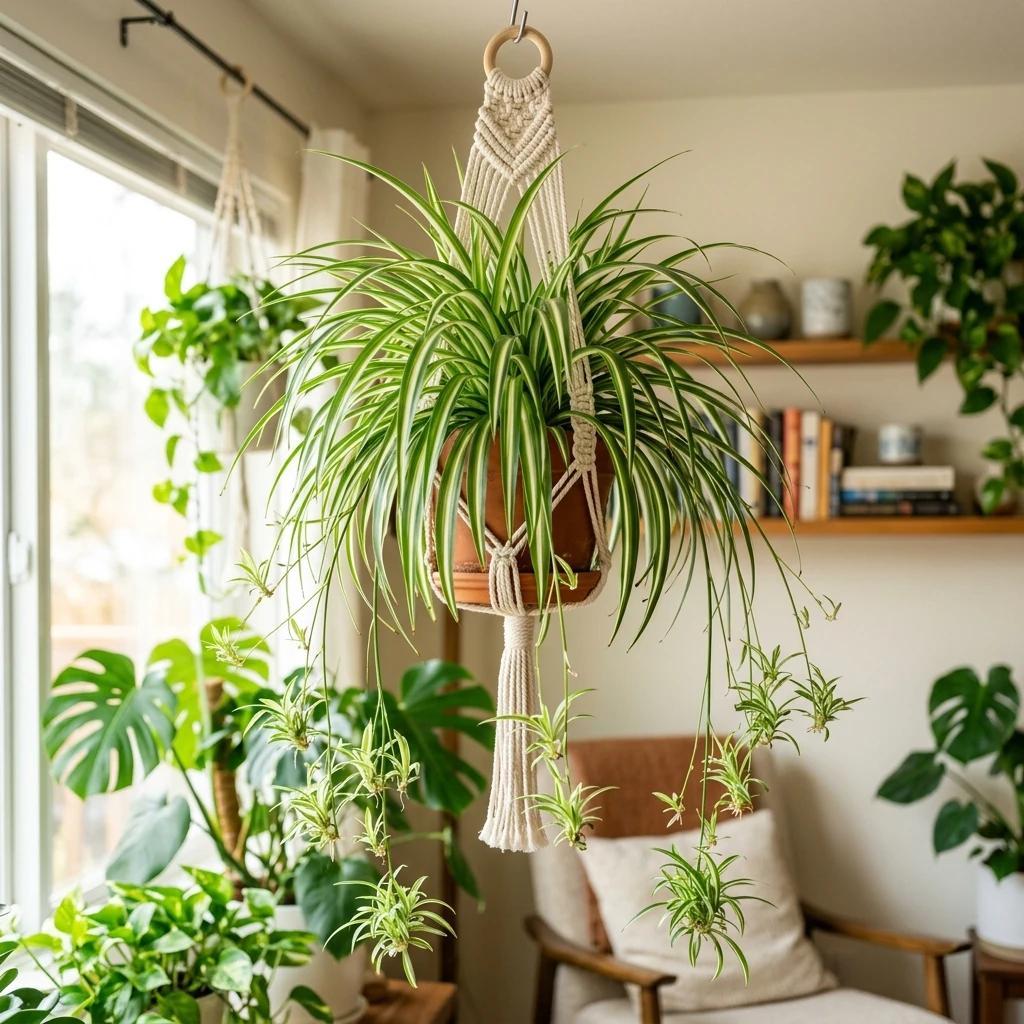
-
Light
Thrives in bright, indirect sunlight. It can survive in lower light, but growth will slow drastically and variegation (the white stripes) may fade to solid green.
-
Temperature
60-80°F (15-27°C)
-
Growth
fast
-
pH range
6.0-7.2
The Big Comeback
The Spider Plant (Chlorophytum comosum) was a staple of 1970s interior design, and in 2026, it is experiencing a massive resurgence in popularity. Plant lovers are returning to this classic "bread and butter" plant because it is practically indestructible, incredibly fast-growing, and completely non-toxic to pets.
A Warning for Cat Owners
While Spider Plants are listed as 100% non-toxic by the ASPCA, they are known to have a mild, harmless hallucinogenic effect on felines (similar to catnip). If you have cats, you will likely find them obsessively chewing the long, grassy leaves. To preserve the aesthetic of your plant, it is best kept in a hanging basket out of feline reach.
Recommended next actions
Next Best Actions
Use calculators and guides to turn this plant profile into a practical care routine.
Guide
Why Watering Your Plants at Night is Killing Them: Best Watering Practices Guide
After professionally managing thousands of indoor houseplants and outdoor garden beds over the last 10 years, we've identified nighttime watering as the number one preventable cause of fatal fungal diseases.
Guide
Why Your Houseplants Are Dying: The Ultimate Root Rot Rescue Guide
After rescuing thousands of rotting houseplants from big-box stores over a 12-year nursery career, we have developed a foolproof method to diagnose, treat, and completely prevent deadly root rot.
Guide
Calathea Orbifolia Care Guide: Growing the Most Stunning Prayer Plant
After cultivating over 50 Calatheas and maintaining high-humidity greenhouse environments for 5 years, we have mastered the art of keeping Calathea Orbifolia thriving indoors without brown edges.
Calculator
Aquarium Plant Fertilizer Dosage Calculator
Calculate exact macro and micro fertilizer doses for your planted aquarium based on tank volume, plant density, CO2 system, and dosing strategy.
Calculator
Sunlight Calculator
Determine the ideal indoor light placement for your plant based on species, window direction, and seasonal light availability.
Quiz
Get My Plant Map
Answer a short placement quiz for direction, room, light, and care-fit recommendations.
Structured Plant Data
Plant Data Profile
Care values below are generated from the plant JSON fields so users and crawlers can read the structured plant profile directly on the page.
Growth Characteristics
Growth Rate
fast
Mature Height
1-2 feet
Mature Spread
2-3 feet
Life Cycle
Perennial
Flowering Season
Spring/Summer (produces tiny white star-shaped flowers)
Container Friendly
yes
Indoor Capable
yes
Environmental Parameters
| Parameter | Recommended | Survivable |
|---|---|---|
| Temperature | 60-80°F (15-27°C) | 50-90°F (10-32°C) |
| Humidity | 40-60% | 20-80% |
| Soil PH | 6.0-7.2 | 5.5-7.5 |
Lighting
Description
Thrives in bright, indirect sunlight. It can survive in lower light, but growth will slow drastically and variegation (the white stripes) may fade to solid green.
Nutrients
Nitrogen Demand
low
Phosphate Demand
low
Potassium Demand
low
Micronutrient Notes
Extremely susceptible to fluoride toxicity from tap water.
Fertilizer Frequency
Feed sparingly. Once a month during spring/summer with a half-strength liquid fertilizer.
Organic Options
A light top dressing of worm castings.
Relationships
-
Tap Water
Vulnerability | Strength 9
Highly sensitive to fluoride and chlorine in municipal tap water, which directly causes their tips to turn black or crispy brown.