Pink Princess Philodendron Care Guide 2026: Variegation
Philodendron erubescens
Learn how to successfully care for the Pink Princess Philodendron. Discover the exact light and humidity requirements to maintain its deep pink variegation.
-
Light
Balancing light is critical. Too little light, and the plant will revert to green. Too much direct sun, and the pink patches (which lack chlorophyll) will easily scorch and turn brown.
-
Temperature
65-80°F (18-27°C)
-
Growth
moderate
-
pH range
6.0-6.5
The Variegation Sensation
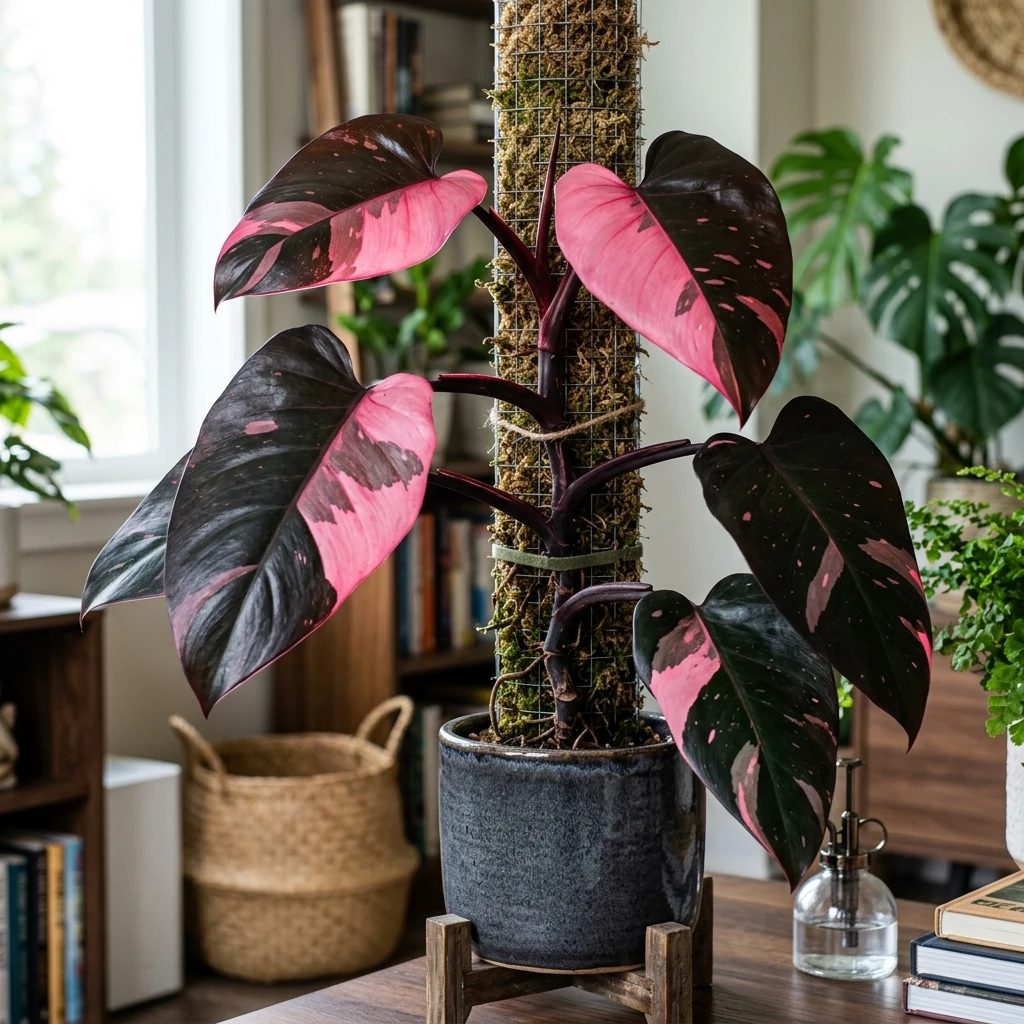
The Pink Princess Philodendron (PPP) is the undisputed poster child for the colored foliage trend. Featuring deep burgundy/black leaves splashed with vibrant bubblegum pink, it is a stunning collector's plant. Because the variegation is a natural mutation rather than a stable genetic trait, no two leaves are ever the same.
How to Maintain the Pink Color
The pink variegation is a double-edged sword. Because pink sections contain zero chlorophyll, they cannot photosynthesize. The plant must carefully balance the green (energy-producing) and pink (aesthetic) sections. To encourage more pink, you must provide the plant with bright, indirect light. If you place it in a dark corner, the plant will panic and push out solid green leaves just to survive.
Recommended next actions
Next Best Actions
Use calculators and guides to turn this plant profile into a practical care routine.
Guide
Philodendron Care Guide: Growing Trending Varieties in 2026
After successfully growing and propagating over 200 Philodendron plants across 8 years, we've created this complete care guide covering trending varieties like Pink Princess, Birkin, Congo Rojo, and Brasil.
Guide
Thai Constellation Monstera Care Guide: Growing the Variegated Star Plant
Having cultivated and propagated over 100 rare Monsteras over the past 7 years, we have developed a proven method for maximizing the growth and stable variegation of the highly sought-after Thai Constellation Monstera.
Guide
Alocasia Care Guide: Growing the Dramatic Elephant Ear Plant Indoors
After successfully growing and rescuing over 80 Alocasia plants across 7 years in varying home environments, we've refined the exact conditions these dramatic elephant ear plants need to thrive indoors.
Calculator
Sunlight Calculator
Determine the ideal indoor light placement for your plant based on species, window direction, and seasonal light availability.
Calculator
Aquarium Plant Fertilizer Dosage Calculator
Calculate exact macro and micro fertilizer doses for your planted aquarium based on tank volume, plant density, CO2 system, and dosing strategy.
Calculator
Fertilizer Calculator
Calculate the exact fertilizer dose and feeding schedule for your plant based on species, pot size, growth stage, and season.
Structured Plant Data
Plant Data Profile
Care values below are generated from the plant JSON fields so users and crawlers can read the structured plant profile directly on the page.
Growth Characteristics
Growth Rate
moderate
Mature Height
4-5 feet indoors (with support)
Mature Spread
2 feet
Life Cycle
Perennial
Flowering Season
Rarely flowers indoors
Container Friendly
yes
Indoor Capable
yes
Environmental Parameters
| Parameter | Recommended | Survivable |
|---|---|---|
| Temperature | 65-80°F (18-27°C) | 60-85°F (15-29°C) |
| Humidity | 60-80% | 40-85% |
| Soil PH | 6.0-6.5 | 5.5-7.0 |
Lighting
Description
Balancing light is critical. Too little light, and the plant will revert to green. Too much direct sun, and the pink patches (which lack chlorophyll) will easily scorch and turn brown.
Nutrients
Nitrogen Demand
medium
Phosphate Demand
medium
Potassium Demand
medium
Micronutrient Notes
Requires a balanced profile.
Fertilizer Frequency
Feed monthly during spring and summer with a balanced, diluted liquid fertilizer.
Organic Options
Worm castings during repotting.