Monstera Deliciosa Care: Giant Leaves & Holes (2026)
Monstera deliciosa
Learn how to care for a Monstera Deliciosa indoors. Discover expert tips on moss poles, lighting for fenestrations, watering, and managing aerial roots.
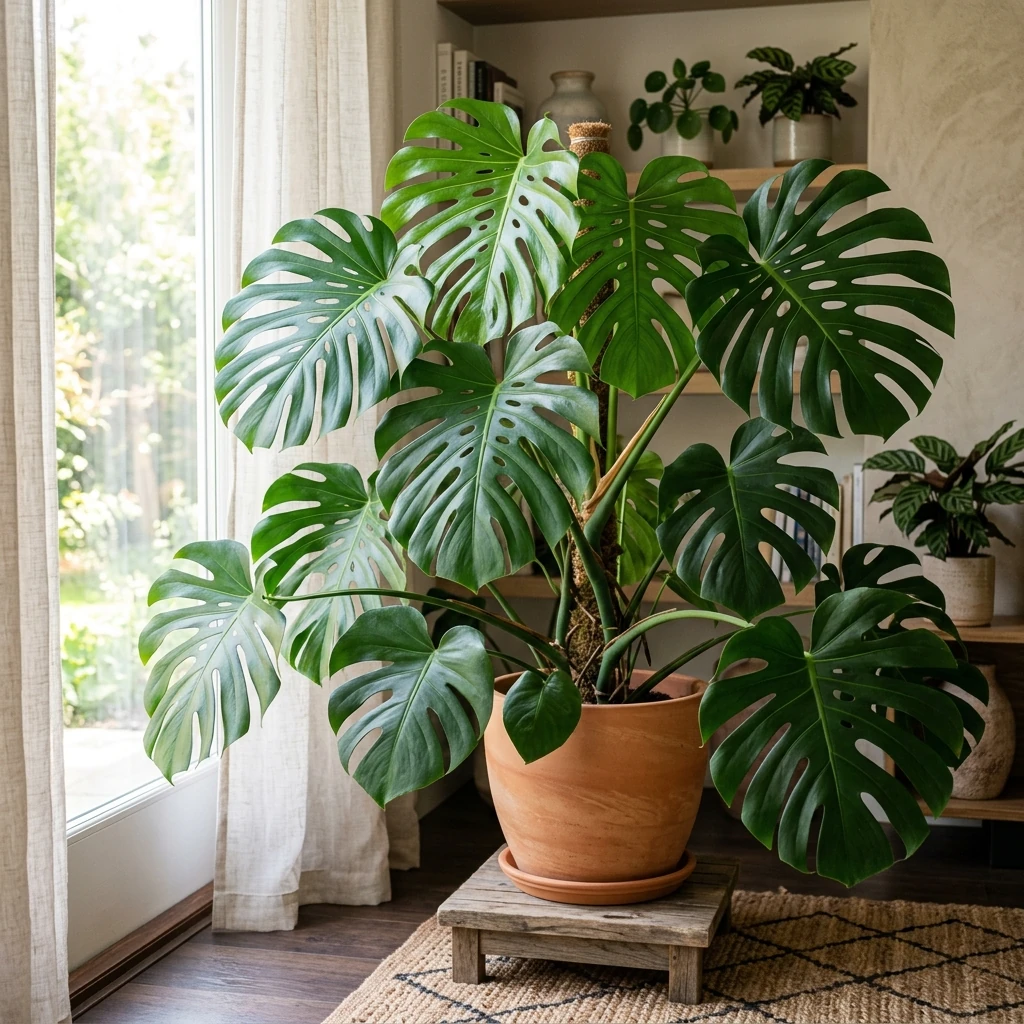
-
Light
Prefers bright, indirect light. Direct morning sun is great, but harsh afternoon sun will scorch the leaves. Low light leads to small, solid leaves without holes.
-
Temperature
65-85°F (18-29°C)
-
Growth
fast
-
pH range
5.5-7.0
The King of Houseplants
The Monstera Deliciosa, famously known as the Swiss Cheese Plant, continues to dominate the houseplant world. Renowned for its massive, fenestrated (holey) leaves, it brings an immediate jungle aesthetic to any room. While wild forms climb dozens of feet up rainforest trees, indoors they are incredibly adaptable, provided you give them a sturdy support structure.
Why You Need a Moss Pole
Monsteras are epiphytic vines, meaning they naturally climb up trees rather than growing like a bush. If left unsupported, your Monstera will sprawl horizontally across the floor and produce smaller leaves. Providing a moss pole or coco coir stake allows the aerial roots to grab on. Once the plant feels structurally secure, it responds by pushing out significantly larger, highly fenestrated leaves.
Recommended next actions
Next Best Actions
Use calculators and guides to turn this plant profile into a practical care routine.
Guide
Calathea Orbifolia Care Guide: Growing the Most Stunning Prayer Plant
After cultivating over 50 Calatheas and maintaining high-humidity greenhouse environments for 5 years, we have mastered the art of keeping Calathea Orbifolia thriving indoors without brown edges.
Guide
Why Watering Your Plants at Night is Killing Them: Best Watering Practices Guide
After professionally managing thousands of indoor houseplants and outdoor garden beds over the last 10 years, we've identified nighttime watering as the number one preventable cause of fatal fungal diseases.
Guide
Alocasia Care Guide: Growing the Dramatic Elephant Ear Plant Indoors
After successfully growing and rescuing over 80 Alocasia plants across 7 years in varying home environments, we've refined the exact conditions these dramatic elephant ear plants need to thrive indoors.
Calculator
Humidity Calculator
Assess your home's current humidity and get specific improvement recommendations for tropical houseplants like Calatheas, Orchids, and Ferns.
Calculator
Aquarium Plant Fertilizer Dosage Calculator
Calculate exact macro and micro fertilizer doses for your planted aquarium based on tank volume, plant density, CO2 system, and dosing strategy.
Calculator
Heat Stress Diagnosis Calculator
Diagnose plant heat stress risk from your temperature, humidity, sunlight exposure, and symptoms — then get specific watering, shade, and airflow actions.
Structured Plant Data
Plant Data Profile
Care values below are generated from the plant JSON fields so users and crawlers can read the structured plant profile directly on the page.
Growth Characteristics
Growth Rate
fast
Mature Height
6-10 feet indoors (climber)
Mature Spread
3-5 feet
Life Cycle
Perennial
Flowering Season
Rare indoors
Container Friendly
yes
Indoor Capable
yes
Environmental Parameters
| Parameter | Recommended | Survivable |
|---|---|---|
| Temperature | 65-85°F (18-29°C) | 55-90°F (13-32°C) |
| Humidity | 60%+ | 40-80% |
| Soil PH | 5.5-7.0 | 5.0-7.5 |
Lighting
Description
Prefers bright, indirect light. Direct morning sun is great, but harsh afternoon sun will scorch the leaves. Low light leads to small, solid leaves without holes.
Nutrients
Nitrogen Demand
high
Phosphate Demand
medium
Potassium Demand
medium
Micronutrient Notes
Requires a complete profile (like a 9-3-6 Foliage Pro) during active growth to support massive leaf expansion.
Fertilizer Frequency
Feed every 2 weeks during spring/summer. Reduce to once a month or stop entirely in winter.
Organic Options
Top dress with earthworm castings.