Money Plant (Pothos) Care: Watering, Light, Propagation and Vastu Tips
Epipremnum aureum
The ultimate beginner-friendly trailing vine. Valued for its air-purifying qualities, rapid growth, and ability to thrive in almost any indoor environment.
-
Light
Highly adaptable. It thrives in bright, indirect light but will happily survive in low-light environments.
-
Temperature
65-85°F (18-29°C)
-
Growth
fast
-
pH range
6.0-6.5
Quick Answer
The Money Plant (Pothos) is incredibly easy to care for. Place it in low to bright indirect light, and only water it when the top two inches of soil feel completely dry. It can easily be propagated by placing stem cuttings in water.
Vastu Placement
Vastu Placement and Practical Fit
In Vastu and Feng Shui, the Money Plant is strongly associated with attracting financial luck and prosperity. The North zone is governed by Kuber, the deity of wealth, making it an excellent placement. Train the vines to grow upwards (using a moss pole or trellis) rather than trailing downwards to symbolize upward growth and rising wealth.
Best Directions
North, East, South East
Best Rooms
Living Room, Study, Entrance, Office
Light Range
Low, Medium, Bright Indirect
Care Profile
Beginner | Not pet safe | Indoor suitable
Common Goals
Reference: https://www.rhs.org.uk/plants/epipremnum
Overview
If there is one plant that can survive almost anything, it is the Money Plant (widely known in the West as Pothos or Devil's Ivy). Native to French Polynesia, this resilient tropical vine has become a staple in homes and offices across the globe. It earned the nickname "Devil's Ivy" because it is nearly impossible to kill and stays vibrantly green even when kept in the dark.
Whether you let it cascade from a hanging basket, train it to climb a moss pole, or simply let it trail across a bookshelf, the Money Plant is the ultimate confidence-builder for new gardeners.
Light and Placement
One of the best traits of the Money Plant is its adaptability. It genuinely thrives in bright, indirect sunlight—which helps maintain the beautiful yellow or white variegation on its leaves—but it will happily adapt to low-light corners, bathrooms, and fluorescent-lit cubicles.
The only lighting condition it despises is harsh, direct midday sun, which will scorch its leaves and bleach out the color.
Watering Strategy
The Money Plant is much more tolerant of being underwatered than overwatered. Let the soil dry out significantly between watering sessions. When the plant is thirsty, its leaves will start to droop slightly—this is your cue to give it a thorough soaking. Once you water it, the leaves will perk right back up within a few hours. If the leaves are turning yellow and the soil feels wet, you are watering too frequently.
Soil and Propagation
Any standard, well-draining indoor potting mix will work perfectly. They aren't fussy about soil.
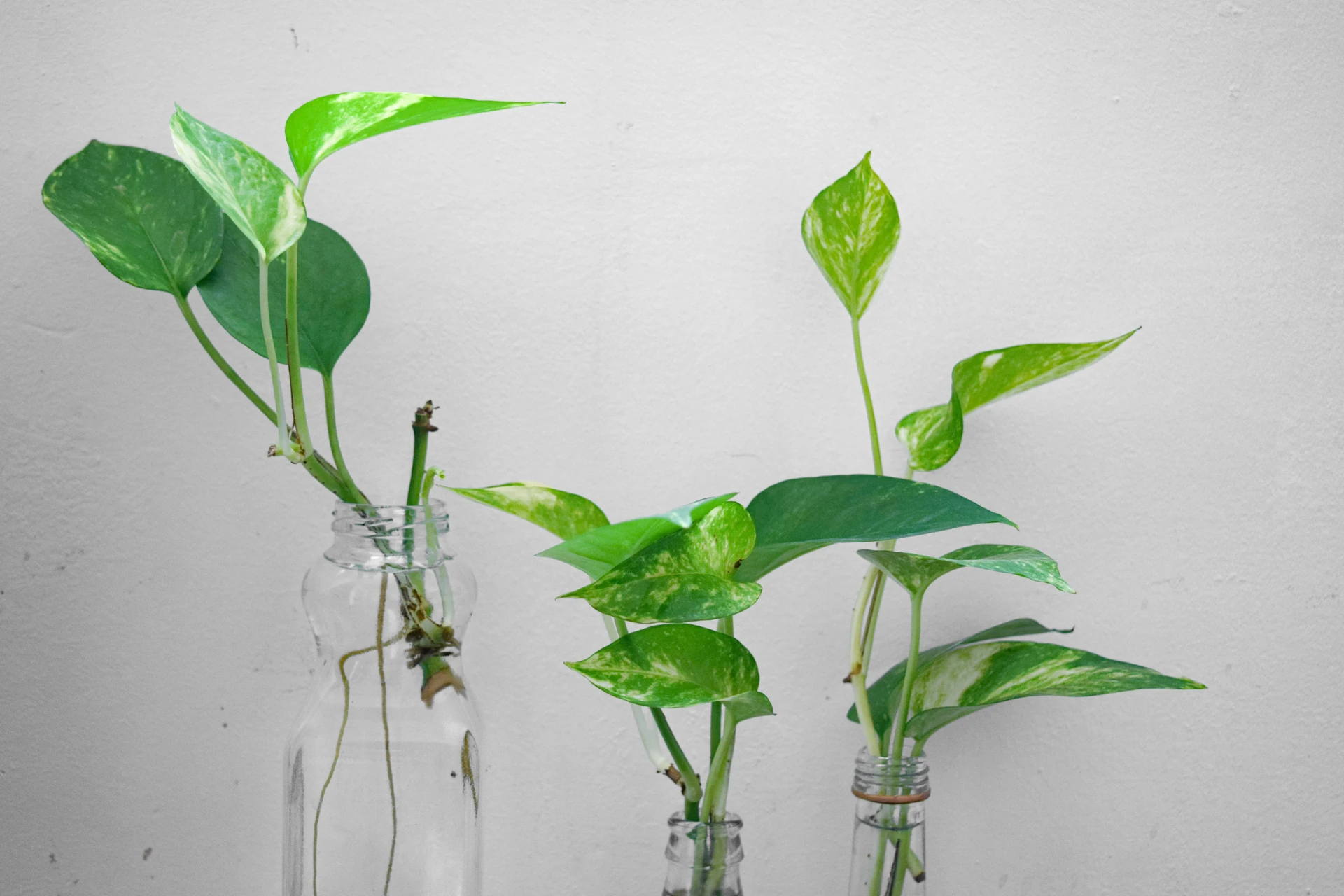
Where this plant truly shines is in propagation. It is famously easy to clone. Simply cut a piece of the vine right below a 'node' (the little brown bump on the stem where the leaf attaches) and stick that node directly into a glass of water. Within a week or two, you will see fresh white roots sprouting. You can either transfer it to soil or let it live in the water permanently!
Pruning and Maintenance
Over time, Money Plants can grow incredibly long vines. If you notice the vines are getting "leggy" (large gaps of bare stem between leaves), don't be afraid to give the plant a haircut. Pruning actually stimulates the plant to push out new growth from the top of the pot, resulting in a much bushier, fuller plant.
Keep the leaves dust-free by wiping them down with a damp cloth every few months, which helps the plant photosynthesize more efficiently and keeps it looking glossy.
Recommended next actions
Next Best Actions
Use calculators and guides to turn this plant profile into a practical care routine.
Guide
Thai Constellation Monstera Care Guide: Growing the Variegated Star Plant
Having cultivated and propagated over 100 rare Monsteras over the past 7 years, we have developed a proven method for maximizing the growth and stable variegation of the highly sought-after Thai Constellation Monstera.
Guide
Why Watering Your Plants at Night is Killing Them: Best Watering Practices Guide
After professionally managing thousands of indoor houseplants and outdoor garden beds over the last 10 years, we've identified nighttime watering as the number one preventable cause of fatal fungal diseases.
Calculator
Sunlight Calculator
Determine the ideal indoor light placement for your plant based on species, window direction, and seasonal light availability.
Quiz
Get My Plant Map
Answer a short placement quiz for direction, room, light, and care-fit recommendations.
Guide
Alocasia Care Guide: Growing the Dramatic Elephant Ear Plant Indoors
After successfully growing and rescuing over 80 Alocasia plants across 7 years in varying home environments, we've refined the exact conditions these dramatic elephant ear plants need to thrive indoors.
Calculator
Fertilizer Calculator
Calculate the exact fertilizer dose and feeding schedule for your plant based on species, pot size, growth stage, and season.
Structured Plant Data
Plant Data Profile
Care values below are generated from the plant JSON fields so users and crawlers can read the structured plant profile directly on the page.
Growth Characteristics
Growth Rate
fast
Mature Height
Vines can trail 10-15 feet indoors (up to 40+ feet outdoors)
Mature Spread
2-3 feet (container width)
Life Cycle
Perennial
Flowering Season
Rarely flowers indoors
Container Friendly
yes
Indoor Capable
yes
Environmental Parameters
| Parameter | Recommended | Survivable |
|---|---|---|
| Temperature | 65-85°F (18-29°C) | 50-95°F (10-35°C) |
| Humidity | 40-60% | 20-80% |
| Soil PH | 6.0-6.5 | 5.5-7.5 |
Lighting
Description
Highly adaptable. It thrives in bright, indirect light but will happily survive in low-light environments.
Nutrients
Nitrogen Demand
medium
Phosphate Demand
low
Potassium Demand
medium
Micronutrient Notes
Not a heavy feeder. If the plant is growing in water, use a highly diluted liquid fertilizer to prevent nutrient burn.
Fertilizer Frequency
Feed monthly during the spring and summer with a balanced liquid houseplant fertilizer.
Organic Options
Worm castings mixed into the top layer of soil annually.
Relationships
-
Low Light
Requirement | Strength 8
While it survives low light, heavily variegated varieties (like Golden or Marble Queen) will revert to solid green if they don't get enough light.
-
Overwatering
Vulnerability | Strength 9
The fastest way to kill a Money Plant is keeping the soil constantly wet, which leads to root rot.
Money Plant Growing Setups
| Setup Method | Light Level | Watering Strategy | Difficulty |
|---|---|---|---|
| Hanging Basket (Soil) | Bright Indirect | Dry out between watering | Easy |
| Water Jar / Hydroponic | Low to Medium | Top-up & change bi-weekly | Very Easy |
| Moss Pole / Climbing | Bright Indirect | Mist pole & water soil | Moderate |
Troubleshooting Guide
1 Yellow leaves near the base
Cause: Overwatering, resulting in root rot
Allow the soil to dry completely before the next watering. Ensure the pot has drainage holes.
2 Brown, crispy leaf edges
Cause: Underwatering or extremely dry air
Water more thoroughly when dry, and move away from direct heating or AC vents.
3 Loss of variegation (leaves turning solid green)
Cause: Insufficient light
Move the plant to a brighter location with indirect sunlight to encourage the patterns to return.
4 Leggy vines with few leaves
Cause: Not enough light, or the vine needs pruning
Prune the vine back to encourage bushier growth and move the plant to a brighter spot.
Glossary of Terms
- Node
- The joint on the stem where leaves and aerial roots emerge. When propagating, the node must be submerged in water or buried in soil to grow new roots.
- Variegation
- The appearance of differently colored zones in the leaves (like yellow, white, or cream stripes). In Money Plants, this is driven by genetics and light exposure.
- Aerial Roots
- Small brown nubs growing along the stem. In the wild, the plant uses these to climb up trees. In your home, they are the starting point for propagation.
Scientific References
- Epipremnum aureum - Royal Horticultural Society