Aloe Vera Care Guide: The Complete Indoor and Outdoor Growing Manual
Aloe barbadensis miller
A drought-tolerant succulent widely valued for its soothing gel and low-maintenance indoor growth habits.
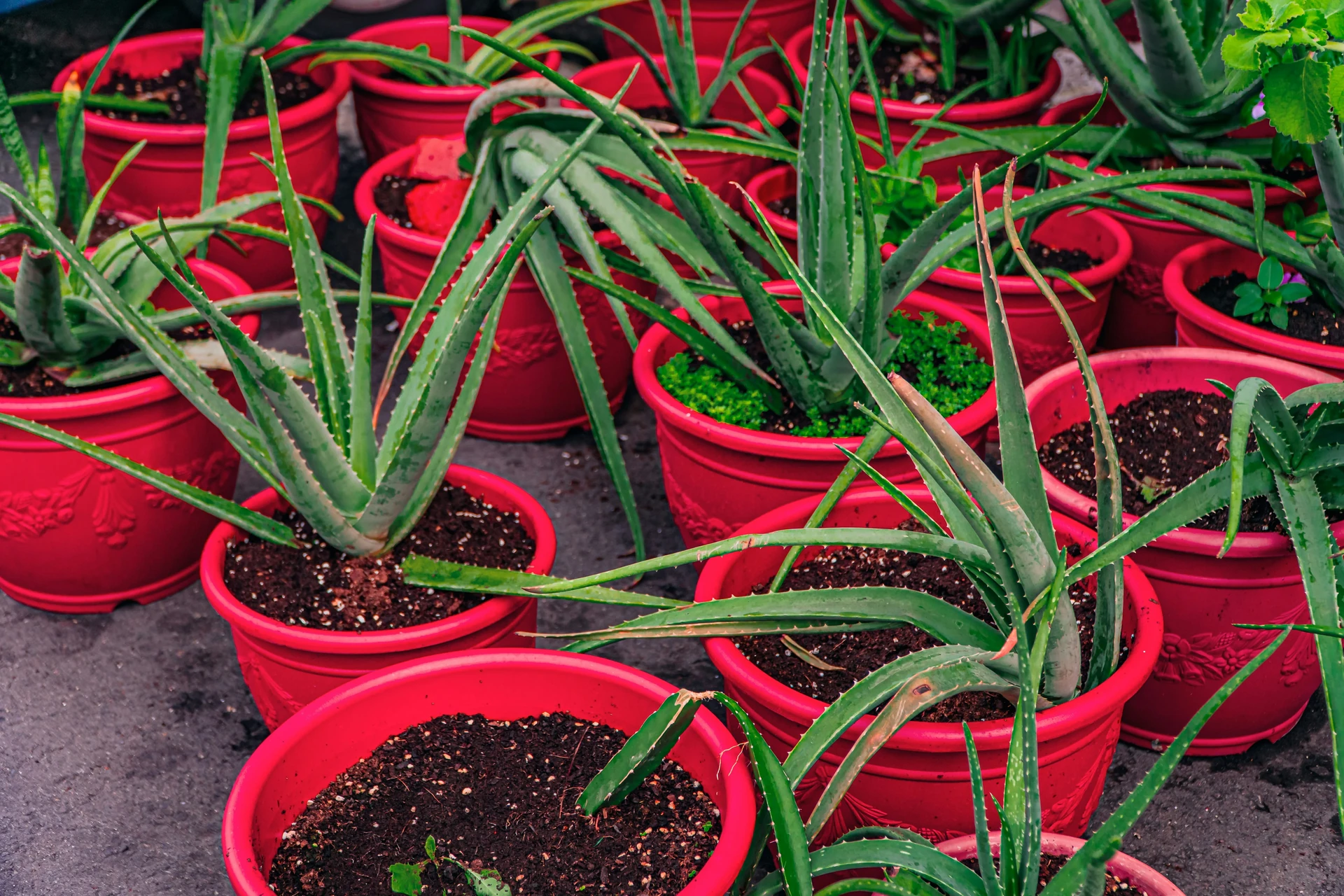
-
Light
Aloe requires intense light to maintain compact, upright growth.
-
Temperature
55-80°F (13-27°C)
-
Growth
slow to moderate
-
pH range
6.0-7.0
Quick Answer
To grow Aloe Vera successfully, use a fast-draining cactus mix and a pot with drainage holes. Place it in a sunny spot receiving direct light, and use the 'soak and dry' method: only water when the soil is completely dry to the bottom of the pot.
Vastu Placement
Vastu Placement and Practical Fit
Aloe Vera is believed to absorb negative energy and promote health. Placing it in the East or North-East helps balance the energy of the home. Keep in bright, active zones.
Best Directions
East, North East
Best Rooms
Balcony, Kitchen, Living Room
Light Range
Bright Indirect, Full Sun
Care Profile
Beginner | Not pet safe | Indoor suitable
Common Goals
Reference: https://www.rhs.org.uk/plants/aloe-vera
Overview
Aloe Vera is a robust, drought-tolerant succulent that has been used for centuries for its skin-soothing gel and ornamental value. Unlike tropical foliage plants, Aloe Vera evolved in arid climates, making it perfectly suited for the drier air often found in modern homes.
As a member of the Asphodelaceae family, Aloe is hardy and forgiving, provided you respect its need for light and avoid overwatering. It is a slow-grower that, with proper care, can live for decades.
- Aloe Vera is a succulent, meaning it stores water in its thick, fleshy leaves to survive long dry spells.
- It is an excellent air-purifying plant, helping to remove toxins like formaldehyde from indoor air.
- Aloe gel has been used in traditional medicine for thousands of years to treat minor burns, cuts, and skin irritations.
- Its architectural shape makes it a popular choice for minimalist home decor.
Botanical Profile
The botanical name is Aloe barbadensis miller. It is a stemless or very short-stemmed succulent, growing in a rosette of thick, fleshy, grey-green leaves.
The leaves are serrated, with small white teeth along the margins. The center of the leaf contains a clear, viscous gel that is the plant's primary water storage mechanism.
- Aloe produces a tall flower spike (raceme) that can reach up to 3 feet in height, featuring tubular yellow or orange flowers.
- The roots are shallow and wide-spreading, which is why Aloe performs best in wider, shallower pots rather than deep ones.
- The plant produces 'pups'—smaller offsets—at the base, which can be separated to grow new plants.
Light and Placement
Aloe Vera thrives in bright, direct sunlight. If you are growing it indoors, a south-facing window is ideal. It needs at least 6 hours of bright light to maintain its compact shape.
While it can tolerate lower light levels, it will eventually lose its vigor, become leggy, and its leaves may curl inward or droop.
- Acclimate your plant slowly if moving from indoors to outdoors, as direct, intense summer sun can cause sunburn (brown patches) on indoor-acclimated leaves.
- Rotate the pot every few weeks to ensure the plant grows evenly and doesn't lean toward the light source.
- Keep the plant in a room with stable temperatures; avoid placing it directly in front of air conditioner vents or heaters.
Watering Strategy
The most important aspect of Aloe care is the 'Soak and Dry' method. Never water on a schedule (e.g., 'every Monday'). Instead, stick your finger into the soil. If it is dry up to the first knuckle, water it deeply until water runs out of the drainage hole.
If the soil is still damp, do not water. Sitting in wet soil is the fastest way to kill an Aloe plant.
- Use a pot with drainage holes. If your decorative pot has no holes, keep the plant in a plastic nursery pot inside the decorative container.
- Empty the saucer after watering; never let the pot sit in standing water.
- During winter, the plant enters a dormant phase and needs significantly less water.
Soil and Potting Mix
Aloe Vera requires a gritty, fast-draining potting medium. Standard potting soil is too heavy and retains too much moisture for this plant.
Create a mix using a high-quality cactus or succulent soil blend. If standard soil is all you have, amend it with 50% perlite, pumice, or coarse sand to increase aeration.
- Terracotta pots are the best choice for Aloe Vera because the clay is porous and helps the soil dry out more quickly.
- Repot only when the plant has become extremely root-bound or the offsets are crowding the pot, usually every 2-3 years.
- Ensure the soil level remains below the rim of the pot to prevent water from splashing onto the leaves.
Fertilizer and Nutrients
Aloe is a light feeder. Over-fertilizing can lead to weak growth and leaf tip burn. A balanced, water-soluble fertilizer formulated for succulents, applied at half-strength, is sufficient.
Fertilize only during the active growing season (Spring and Summer). Do not fertilize during winter dormancy.
- If you repot your Aloe into fresh soil, you likely won't need to fertilize for at least 6 months, as fresh soil contains adequate nutrients.
- Use organic fertilizers sparingly to avoid salt buildup in the soil.
- If the leaves look pale or stunted despite good light, a light dose of fertilizer may help boost growth.
Propagation Methods
Propagation is best achieved by separating the offsets (pups) from the parent plant. This is the most reliable method for growing new Aloe plants.
Carefully remove the plant from its pot. Identify a pup that is at least 3-4 inches tall with a few of its own roots. Use a sharp, clean knife to separate it from the mother plant.
- Allow the cut on the pup to dry (callus) for 24-48 hours in a shaded, dry place before potting it. This prevents rot.
- Plant the callused pup in a small pot with fresh, dry succulent mix.
- Wait about a week before watering the new pup to allow it to settle into its new environment.
Common Problems and Troubleshooting
The most common issue is root rot, manifested by mushy, brown leaves and a loose, wobbly stem. This is invariably caused by overwatering or poor drainage.
Another issue is 'sun stress' or sunburn—if the plant is moved too quickly to high light, it may turn brown or reddish-brown. This is a stress response, not a disease, and the plant will recover once it adapts.
- Pests are rare but can include mealybugs or scale. Wipe them off with an alcohol-soaked cotton swab.
- If leaves are thin and curling, the plant is likely dehydrated; give it a deep, thorough watering.
- If leaves are mushy and yellowing, stop watering immediately and inspect the roots.
Seasonal Care
Aloe Vera is a warm-season grower. During the spring and summer, it will actively grow and produce pups. During the winter, growth slows dramatically.
In winter, move the plant to a brighter spot if possible, as days are shorter and light is weaker. Reduce watering significantly.
- Protect Aloe from temperatures below 40°F (4°C); it is not frost-tolerant.
- If you keep Aloe outdoors in summer, bring it inside well before the first frost in autumn.
- Clean the leaves occasionally with a damp cloth to remove dust, which allows the plant to photosynthesize more efficiently.
Advanced Growing Tips
To encourage flowering, an Aloe Vera needs to be mature (at least 3-4 years old) and receive high levels of light for extended periods. It is rare for Aloe to flower indoors without high-intensity supplemental lighting.
The shape of the Aloe rosette is a direct reflection of its light intake; a perfectly symmetrical, compact rosette indicates optimal light and care.
- Avoid deep pots; Aloe has a shallow root system and does not need vast amounts of soil.
- Use a top dressing of gravel or decorative stones; this keeps the lower leaves off the moist soil and improves the aesthetic.
- If your Aloe grows too tall and unstable, it may need to be decapitated (beheaded) and re-rooted, though this is an advanced technique.
Recommended next actions
Next Best Actions
Use calculators and guides to turn this plant profile into a practical care routine.
Guide
Thai Constellation Monstera Care Guide: Growing the Variegated Star Plant
Having cultivated and propagated over 100 rare Monsteras over the past 7 years, we have developed a proven method for maximizing the growth and stable variegation of the highly sought-after Thai Constellation Monstera.
Guide
Calathea Orbifolia Care Guide: Growing the Most Stunning Prayer Plant
After cultivating over 50 Calatheas and maintaining high-humidity greenhouse environments for 5 years, we have mastered the art of keeping Calathea Orbifolia thriving indoors without brown edges.
Guide
The Ultimate Guide to Growing Lavender
After cultivating over 10 acres of commercial lavender and testing dozens of varieties in pots over the past decade, we have perfected the precise watering and pruning methods needed to keep your lavender alive and blooming for years.
Calculator
Potting Mix Ratio Calculator
Calculate the ideal potting mix ratios for any plant type — from moisture-loving tropicals to drought-tolerant succulents.
Calculator
Sunlight Calculator
Determine the ideal indoor light placement for your plant based on species, window direction, and seasonal light availability.
Calculator
Watering Calculator
Calculate the correct watering frequency for your plant based on species, pot size, soil type, season, and climate.
Structured Plant Data
Plant Data Profile
Care values below are generated from the plant JSON fields so users and crawlers can read the structured plant profile directly on the page.
Growth Characteristics
Growth Rate
slow to moderate
Mature Height
1-3 feet
Mature Spread
1-2 feet
Life Cycle
Perennial
Flowering Season
spring/summer (rare indoors)
Container Friendly
yes
Indoor Capable
yes
Environmental Parameters
| Parameter | Recommended | Survivable |
|---|---|---|
| Temperature | 55-80°F (13-27°C) | 40-95°F (4-35°C) |
| Humidity | 30-50% | 20-60% |
| Soil PH | 6.0-7.0 | 5.5-8.0 |
Lighting
Description
Aloe requires intense light to maintain compact, upright growth.
Nutrients
Nitrogen Demand
low
Phosphorus Demand
medium
Potassium Demand
medium
Micronutrient Notes
Minimal feeding required; prefers lean soil conditions.
Fertilizer Frequency
Fertilize once in spring and once in summer using a balanced succulent fertilizer.
Organic Options
Worm castings or diluted compost tea.
Relationships
-
Sunlight
Requirement | Strength 9
Insufficient light causes etiolation (stretching) and weak, drooping leaves.
-
Watering
Requirement | Strength 10
Critical requirement. Always wait for full dry-down to prevent root rot.
-
Drainage
Requirement | Strength 10
The pot must have drainage holes to ensure the plant does not sit in water.
-
Overwatering
Vulnerability | Strength 10
The primary cause of plant death in Aloe species.
Aloe Vera Growing Methods Compared
| Growing Method | Space Requirements | Growth Rate | Recommended for |
|---|---|---|---|
| Outdoor in Ground | Minimum 2 feet wide | Fastest | Arid climates with full sun |
| Container (Terracotta) | Minimum 8 inches diameter | Moderate | Indoor/Balcony growing |
| Hanging Planter | Minimum 6 inches diameter | Slow | Limited space (choose offsets) |
| Windowsill Pot | Minimum 6 inches diameter | Moderate | Indoor growing with light |
Troubleshooting Guide
1 Mushy, soft leaves
Cause: Overwatering or root rot
Reduce watering. If leaves are black/mushy at the base, remove the plant, trim rotted roots, and repot in dry soil.
2 Brown, dry leaf tips
Cause: Underwatering or extreme heat
Increase watering frequency slightly, but maintain the dry-down period.
3 Leaf curling/thinning
Cause: Dehydration
Ensure the plant receives a deep, thorough watering until water drains out.
4 Reddish-brown leaves
Cause: Sun stress (too much direct light)
The plant is stressed but not dying. Move to a slightly less intense light area if you prefer green leaves.
5 Plant leaning/toppling
Cause: Etiolation (not enough light) or top-heavy plant
Move to a brighter location. You may need to stake it or repot it into a heavier terracotta pot for stability.
Glossary of Terms
- Succulent
- A plant with fleshy, thickened tissues adapted to water storage, typically found in arid climates.
- Etiolation
- The process where a plant grows weak, spindly, and pale due to lack of sufficient light.
- Offset
- A young plant (also called a pup) that develops at the base of the parent plant, commonly used for propagation.
- Root Rot
- A condition caused by fungal or bacterial infection due to waterlogged soil, leading to decayed, mushy, and foul-smelling roots.
- Callus
- The hardened, dry tissue that forms over a wound or cut on a plant, helping to prevent infection and rot.
Scientific References
- Aloe vera - Royal Horticultural Society
- Aloe barbadensis - USDA PLANTS Database
- Succulent Care Guide - National Gardening Association