Giant Elephant Ear Care: Stop Drooping Leaves & Mites
Alocasia macrorrhizos
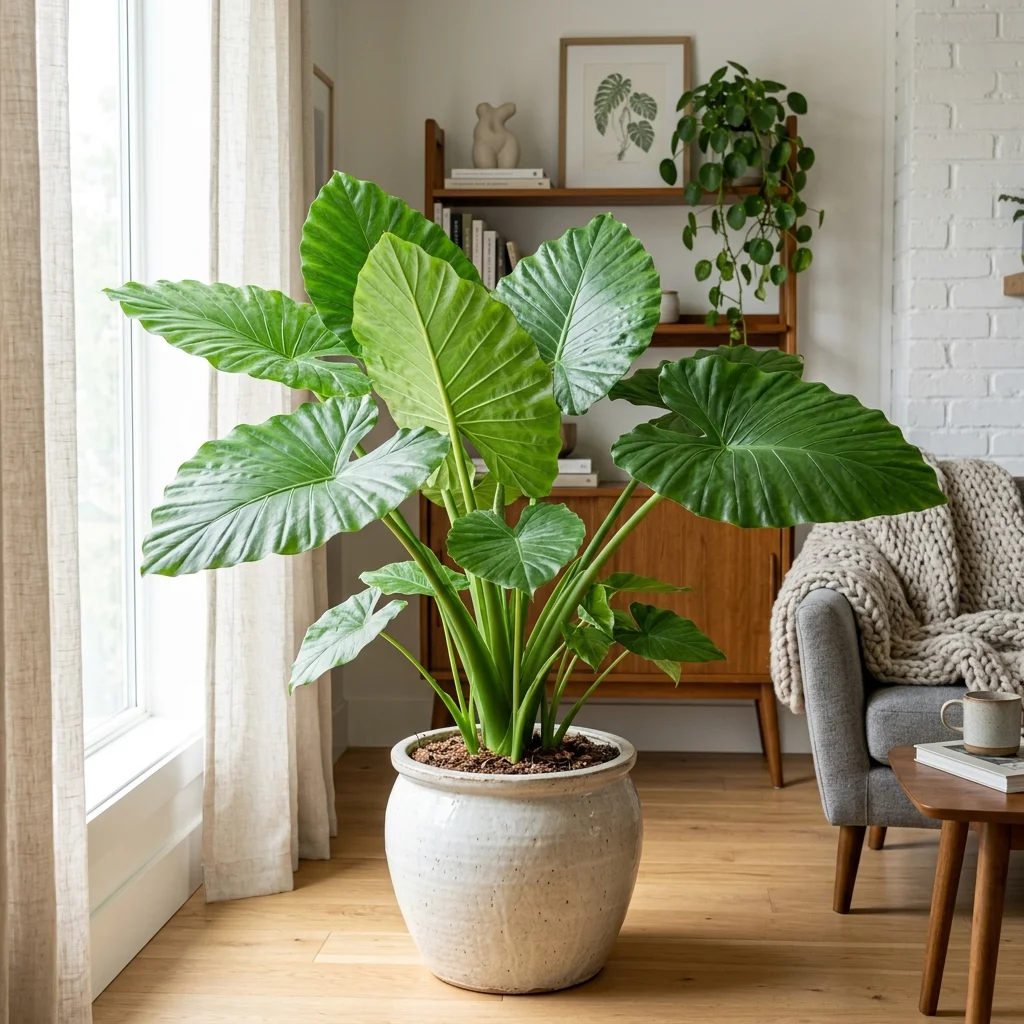
The Giant Elephant Ear is a prehistoric-looking plant that can reach the ceiling indoors. It requires massive amounts of light, fertilizer, and water, and is a major magnet for spider mites.
-
Light
To push out 3-foot wide leaves, it requires an immense amount of solar energy. Needs bright, indirect light and several hours of direct morning sun. Low light will result in small, drooping leaves.
-
Temperature
65°F - 85°F (18°C - 29°C)
Growth
fast
pH Range
5.5 - 6.5
-
Biggest Owner Mistake
Underestimating its size and then pruning aggressively when it outgrows its space—removing mature leaves deprives the plant of photosynthetic energy and stunts the very large-leaf production that makes it impressive. Plan for a dedicated corner before buying.
-
What Nobody Tells You
Water droplets collecting at leaf tips (guttation) is the plant's way of shedding excess moisture, not a sign of disease—but it does signal you should reduce watering frequency. If left on furniture it stains, so position it carefully.
-
Real Home Conditions
Near heating vents, leaf margins develop wide brown crispy bands and the whole plant droops despite wet soil—the hot dry air draws moisture out of the leaves faster than roots can replace it. It also leans dramatically toward any light source and needs weekly rotation.
Quick Answer
The Giant Elephant Ear requires massive amounts of light and water to support its huge leaves. It is highly prone to spider mites, so you must wipe the leaves frequently and keep the humidity high.
Overview
The Giant Elephant Ear (Alocasia macrorrhizos), also known as the Giant Taro, is the ultimate statement plant. While other houseplants sit quietly on a desk, this plant commands the entire room. Native to the tropical rainforests of Southeast Asia, it features massive, arrow-shaped, glossy green leaves with deeply prominent veins. A single leaf can easily grow to be 3 feet long and 2 feet wide.
However, bringing a jungle giant into your living room comes with significant challenges. To push out leaves of that size, the plant acts as a massive biological engine. It requires intense sunlight, huge amounts of water, and heavy fertilization. Furthermore, Alocasias are infamous in the houseplant community for being the ultimate magnet for spider mites. Growing a Giant Elephant Ear successfully requires dedicated space, vigilance, and a rigorous feeding schedule.
Light Requirements: Fueling the Giant
You cannot grow a 6-foot tall plant in a dark corner. The Giant Elephant Ear requires massive amounts of bright, indirect light, and it highly appreciates several hours of direct morning sun. A large south-facing or east-facing window is mandatory.
If the plant does not receive enough light, the massive stems will stretch out (etiolate), become weak, and snap under the weight of the leaves. Additionally, the plant will likely refuse to hold more than one or two leaves at a time, instantly killing off the old leaf the moment a new one attempts to emerge.
Watering: The Fine Line
Because the leaves are so large, they transpire (sweat) massive amounts of water into the air every day. Therefore, the plant is very thirsty. You must keep the soil evenly moist, watering thoroughly when the top 1 to 2 inches of soil feel dry. Do not let the pot dry out completely, or the massive leaves will droop dramatically and collapse onto the floor.
However, despite its thirst, it is grown from a thick, potato-like rhizome/tuber that is highly susceptible to rot. If you water too frequently and the soil turns to mud, the tuber will rot and the entire plant will die within days. Proper drainage is the only thing standing between a thirsty plant and a rotting one.
Temperature and Humidity
This is a true tropical that despises the cold. Maintain temperatures between 65°F and 85°F (18°C - 29°C). If exposed to a cold draft below 55°F (12°C), the plant will assume winter has arrived and may intentionally drop all its leaves and go dormant until spring.
Humidity is critical. It demands humidity levels above 60%. If the air is too dry, the edges of the giant leaves will crisp up, and the dry air will create the perfect breeding ground for spider mites.
Soil and Potting
You must use a very chunky, well-draining aroid mix. Combine high-quality potting soil with 30% coarse perlite and 20% orchid bark. Because it grows so rapidly, it will outgrow its pot quickly. You will likely need to repot it into a larger, very heavy pot every single spring. A heavy ceramic or terracotta pot is highly recommended to prevent the top-heavy plant from tipping over.
The Spider Mite Magnet
There is a running joke among botanists: if you want to know if you have spider mites in your house, buy an Alocasia. Spider mites love the massive, thin leaves. They look like tiny grains of moving dust and leave fine webbing near the stem joints. They suck the sap out of the leaves, causing them to turn yellow and speckled. You must preemptively wipe down the massive leaves with a damp cloth every two weeks, and treat immediately with insecticidal soap if you see any signs of webbing.
Toxicity
The Giant Elephant Ear is highly toxic. It is packed with insoluble calcium oxalate crystals. If chewed by pets or children, it causes immediate, intense burning and swelling of the lips, tongue, and throat, along with severe vomiting. Its sheer size usually deters pets, but caution is still required.
Recommended next actions
Next Best Actions
Use calculators and guides to turn this plant profile into a practical care routine.
Plant Guide
Bird of Paradise
After placing dozens of giant Bird of Paradise plants in luxury homes and offices, we've found that the secret to keeping their massive paddle leaves upright and pristine is maximizing light and heavy summer feeding.
Guide
Fertilizer Burn on Houseplants: How to Identify, Fix & Prevent Salt Damage
Fertilizer burn is one of the most misdiagnosed houseplant problems because its symptoms — brown tips, wilting, yellowing leaves — are nearly identical to overwatering, underwatering, and root rot. The treatment for root rot is opposite to the treatment for fertilizer burn, which means getting the diagnosis wrong makes the plant worse. This guide is built around that diagnostic problem first.
Guide
Humidity Tray vs Humidifier for Houseplants: What Actually Works
With over 14 years of indoor climate management across more than 1,800 diagnosed humidity-failure cases — from browning Calathea tips in air-conditioned apartments to crisping Alocasia leaves during dry winters — we've measured exactly how much humidity each method actually delivers at leaf level, and the gap is larger than most plant owners expect.
Guide
Phalaenopsis Orchid Care Guide: How to Grow and Rebloom Moth Orchids Indoors
Most Phalaenopsis orchids are discarded after their first bloom cycle because their owners don't know what to do next. After growing and reblooming orchids across varying home environments, we can confirm that getting a second, third, and fourth bloom is straightforward — once you understand the one counterintuitive trigger the plant requires.
Calculator
Neem Oil Spray Calculator
Calculate the correct neem oil dilution ratio for your spray bottle size, plant type, and pest severity — safely and without burning leaves.
Calculator
Sunlight Calculator
Determine the ideal indoor light placement for your plant based on species, window direction, and seasonal light availability.
Structured Plant Data
Plant Data Profile
Care values below are generated from the plant JSON fields so users and crawlers can read the structured plant profile directly on the page.
Growth Characteristics
Growth Rate
fast
Mature Height
6-10 feet indoors
Mature Spread
4-6 feet wide
Life Cycle
Perennial
Flowering Season
Summer (produces a spathe and spadix, similar to a peace lily)
Container Friendly
yes
Indoor Capable
yes
Environmental Parameters
| Parameter | Recommended | Survivable |
|---|---|---|
| Temperature | 65°F - 85°F (18°C - 29°C) | 60°F - 90°F (15°C - 32°C) |
| Humidity | 60% - 80% | 40% - 90% |
| Soil PH | 5.5 - 6.5 | 5.0 - 7.5 |
Lighting
Description
To push out 3-foot wide leaves, it requires an immense amount of solar energy. Needs bright, indirect light and several hours of direct morning sun. Low light will result in small, drooping leaves.
Nutrients
Nitrogen Demand
high
Phosphate Demand
low
Potassium Demand
high
Micronutrient Notes
An incredibly heavy feeder. It requires massive amounts of nitrogen to grow its giant leaves.
Fertilizer Frequency
Every two weeks during spring and summer with a strong liquid fertilizer.
Organic Options
Heavy top-dressing of worm castings and compost.
Relationships
-
Spider Mites
Vulnerability | Strength 10
Alocasias are absolute magnets for spider mites. The massive leaves provide acres of breeding ground.
Giant Indoor Plants
| Plant | Leaf Shape | Light Need |
|---|---|---|
| Alocasia Macrorrhiza | Arrow-shaped, upright | Very High |
| Bird of Paradise | Banana-like, split | Direct Sun |
| Monstera Deliciosa | Heart-shaped, fenestrated | Bright Indirect |
Glossary of Terms
- Guttation
- The exudation of drops of xylem sap on the tips or edges of leaves of some vascular plants. Often mistaken for the plant 'crying'.
- Dormancy
- A period in a plant's life cycle when growth, development, and physical activity are temporarily stopped, usually triggered by cold or dark conditions.
Scientific References
- Plants of the World Online - Alocasia macrorrhizos
- Elephant Ear Care