Red Siam Aglaonema Care: The Easiest Red Houseplant
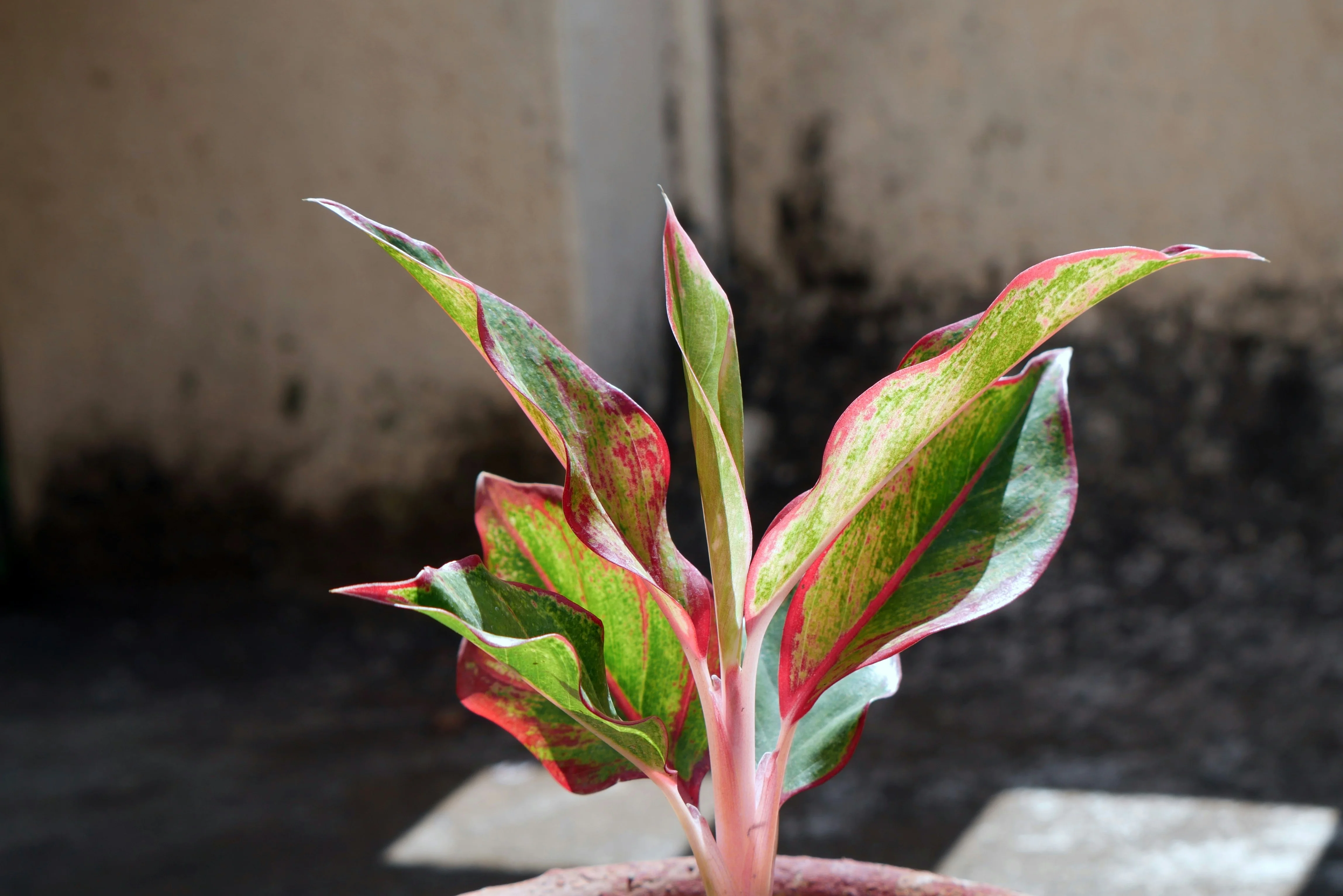
Aglaonema 'Siam Aurora'
The Red Siam Aglaonema is arguably the easiest colorful houseplant in existence. It features dark green leaves bordered with striking neon red, and it easily tolerates missed waterings and low light.
-
Light
While older green Aglaonemas can survive in pitch darkness, red varieties like the Siam Aurora require bright, indirect light to maintain their intense red borders.
-
Temperature
65°F - 85°F (18°C - 29°C)
Growth
slow
pH Range
5.5 - 6.5
-
Biggest Owner Mistake
Placing it in low light because owners assume all aglaonemas are shade lovers—but without bright indirect light, the red-pink pigment breaks down and leaves revert to plain green within months. The color is produced by anthocyanins that only activate under stronger light.
-
What Nobody Tells You
Over-fertilizing actually reduces red pigmentation—excess nitrogen pushes the plant toward green vegetative growth instead of the stress-response coloring. Feed lightly, no more than once a month in the growing season.
-
Real Home Conditions
In air-conditioned rooms it grows very slowly but stays healthy as long as it's away from direct cold drafts. Cold airflow from vents or windows causes leaf edges to brown and curl within a week.
Quick Answer
The Red Siam Aglaonema needs bright, indirect light to keep its red borders; in low light, it will turn green. Water only when the top 3 inches of soil are dry. Yellow, mushy bottom leaves mean you are overwatering.
Overview
Getting a massive pop of neon color in your house usually comes with a catch. If you want the bright pink of a Stromanthe, you have to run a humidifier 24/7. If you want the blazing red of a Croton, you have to bake it in direct sunlight. Enter the Red Siam Aglaonema (Aglaonema 'Siam Aurora').
This cultivar of the classic Chinese Evergreen is an absolute game-changer. It features lance-shaped, dark green leaves that are heavily outlined and veined in brilliant, glowing neon red and pink. The true beauty of this plant, however, is not just its color—it's the fact that it is practically indestructible. It is highly forgiving of missed waterings, doesn't care about humidity, and happily tolerates lower light levels, making it the perfect colorful centerpiece for beginners.
Light Requirements: The Color Tradeoff
Standard green and silver Aglaonemas are famous for surviving in dark, windowless offices for years. The Red Siam, however, has a tradeoff. Because it has less green chlorophyll (due to the massive red borders), it requires more light to survive.
If you place the Red Siam in a dark corner, it won't die immediately, but it will enter a survival state. It will stop producing the beautiful red edges and push out solid green leaves to maximize photosynthesis. To keep the plant brilliantly red, you must place it in bright, indirect light. An east or north-facing window is ideal. Avoid direct, hot afternoon sun, which will scorch the delicate leaves.
Watering: Erring on the Dry Side
The Red Siam Aglaonema has thick, fleshy roots that hold a significant amount of water. This makes it highly tolerant of drought, but incredibly susceptible to root rot if overwatered.
You must allow the top 2 to 3 inches of the potting soil to dry out completely before you water. If you stick your finger into the soil and it feels damp, wait a few more days. When the soil is properly dry, soak the pot thoroughly until water flows out the drainage holes, but ensure it never sits in a saucer of standing water. If the lowest leaves turn a sickly yellow and the stems feel mushy, you are drowning the plant.
Temperature and Humidity
As a tropical understory plant, it requires warm indoor temperatures between 65°F and 85°F (18°C - 29°C). It is highly sensitive to cold drafts; temperatures below 60°F (15°C) can cause permanent cellular damage and leaf drop. Fortunately, it is completely unfazed by dry indoor air and does not require a humidifier.
Soil and Potting
Because the roots rot easily, a fast-draining potting mix is essential. Standard indoor potting soil should be amended with 30% perlite to ensure excess water drains away rapidly. It is a very slow grower and prefers to be slightly root-bound, so it rarely needs to be repotted.
The Flowers
If your Red Siam is perfectly happy, it may suddenly produce a flower during the summer. The flower looks like a small, pale green Peace Lily (a spathe and spadix). While exciting, the flower is not very pretty and drains a massive amount of energy from the plant. It is highly recommended to use sterile scissors to cut the flower off at the base as soon as it appears, forcing the plant to redirect that energy back into growing its spectacular red leaves.
Toxicity
Like all plants in the Araceae family, the Aglaonema contains insoluble calcium oxalate crystals. If chewed by cats, dogs, or children, these microscopic crystals embed in the soft tissues of the mouth and throat, causing severe burning, swelling, drooling, and vomiting. Keep the plant safely out of reach.
Recommended next actions
Next Best Actions
Use calculators and guides to turn this plant profile into a practical care routine.
Plant Guide
Aglaonema
After growing and propagating over 120 Aglaonema specimens across beginner and advanced cultivars in centrally heated homes and low-light interiors over the past 8 years, our team has mastered the precise balance of light, water, and humidity this plant demands — from the dry air of winter radiators to the overwatered pots of summer.
Guide
Why Are My Houseplant Leaves Turning Yellow? Complete Diagnosis & Fix
After diagnosing hundreds of yellow-leaf cases across dozens of plant species, we've mapped the ten distinct causes that look nearly identical at first glance — and built the only systematic guide that tells you not just what's wrong, but exactly how to confirm it and fix it.
Guide
ZZ Plant Care Guide: Growing Zamioculcas Zamiifolia Indoors
After growing ZZ plants across offices, low-light apartments, and sun-drenched rooms for over eight years, we have worked out exactly how this rhizome-powered survivor operates — and why the growers who kill it are almost always doing one specific thing wrong.
Guide
Fertilizer Burn on Houseplants: How to Identify, Fix & Prevent Salt Damage
Fertilizer burn is one of the most misdiagnosed houseplant problems because its symptoms — brown tips, wilting, yellowing leaves — are nearly identical to overwatering, underwatering, and root rot. The treatment for root rot is opposite to the treatment for fertilizer burn, which means getting the diagnosis wrong makes the plant worse. This guide is built around that diagnostic problem first.
Calculator
Grow Bag Sizing Calculator
Find the perfect grow bag size for your plant based on root depth, plant type, and expected mature size.
Calculator
Sunlight Calculator
Determine the ideal indoor light placement for your plant based on species, window direction, and seasonal light availability.
Structured Plant Data
Plant Data Profile
Care values below are generated from the plant JSON fields so users and crawlers can read the structured plant profile directly on the page.
Growth Characteristics
Growth Rate
slow
Mature Height
1-2 feet indoors
Mature Spread
1-2 feet wide
Life Cycle
Perennial
Flowering Season
Summer (produces a small, green/white spathe and spadix)
Container Friendly
yes
Indoor Capable
yes
Environmental Parameters
| Parameter | Recommended | Survivable |
|---|---|---|
| Temperature | 65°F - 85°F (18°C - 29°C) | 60°F - 90°F (15°C - 32°C) |
| Humidity | 40% - 60% | 30% - 80% |
| Soil PH | 5.5 - 6.5 | 5.0 - 7.0 |
Lighting
Description
While older green Aglaonemas can survive in pitch darkness, red varieties like the Siam Aurora require bright, indirect light to maintain their intense red borders.
Nutrients
Nitrogen Demand
low
Phosphate Demand
low
Potassium Demand
low
Micronutrient Notes
Very slow grower; requires minimal feeding.
Fertilizer Frequency
Once every two months during spring and summer with a diluted liquid fertilizer.
Organic Options
A light top dressing of worm castings.
Relationships
-
Root Rot
Vulnerability | Strength 8
Highly susceptible to rot if overwatered, leading to yellowing, mushy stems.
Easy Colorful Houseplants
| Plant | Color | Care Difficulty |
|---|---|---|
| Red Siam Aglaonema | Neon Red & Green | Beginner (Very Forgiving) |
| Croton Petra | Red, Orange, Yellow | Advanced (Needs Direct Sun) |
| Stromanthe Triostar | Hot Pink & White | Advanced (Needs High Humidity) |
Glossary of Terms
- Chlorophyll
- The green pigment in plants responsible for absorbing light energy. If the Red Siam is put in the dark, it will produce more chlorophyll (turning green) to survive.
- Spathe and Spadix
- The signature flower structure of the Araceae family. It consists of a fleshy spike (spadix) surrounded by a leaf-like bract (spathe). Aglaonema flowers should generally be cut off to save energy.
Scientific References
- Aroid Cultivation
- Aglaonema Production Guide