How to Care for a Pilea Peperomioides (Chinese Money Plant) Indoors
Pilea peperomioides
After raising and propagating over 200 Pilea peperomioides plants in typical dry, centrally heated homes and cold-windowsill environments over the past 9 years, we’ve learned exactly how to stop the winter leaf drop and keep the iconic coin leaves flat and vibrant.
-
Light
Pilea demands bright, indirect light to stay compact and produce the iconic flat, coin-like leaves. East or west-facing window is ideal; south-facing only with a sheer curtain. Low winter light causes elongated stems and leaf drop.
-
Temperature
15°C to 24°C (60°F to 75°F)
Growth
moderate
pH Range
6.0 to 7.0
-
Biggest Owner Mistake
Overwatering because the round, pancake-like leaves look succulent and plump—but they do store water, and consistently wet soil causes the stems to rot at soil level and collapse. Ensure the pot has drainage holes and let the top inch dry out before watering.
-
What Nobody Tells You
It needs to be rotated a quarter turn every few days to prevent it from leaning dramatically toward its light source—the stems are surprisingly responsive to phototropism and will arc conspicuously toward a window within a week if left stationary. Regular rotation keeps it growing symmetrically.
-
Real Home Conditions
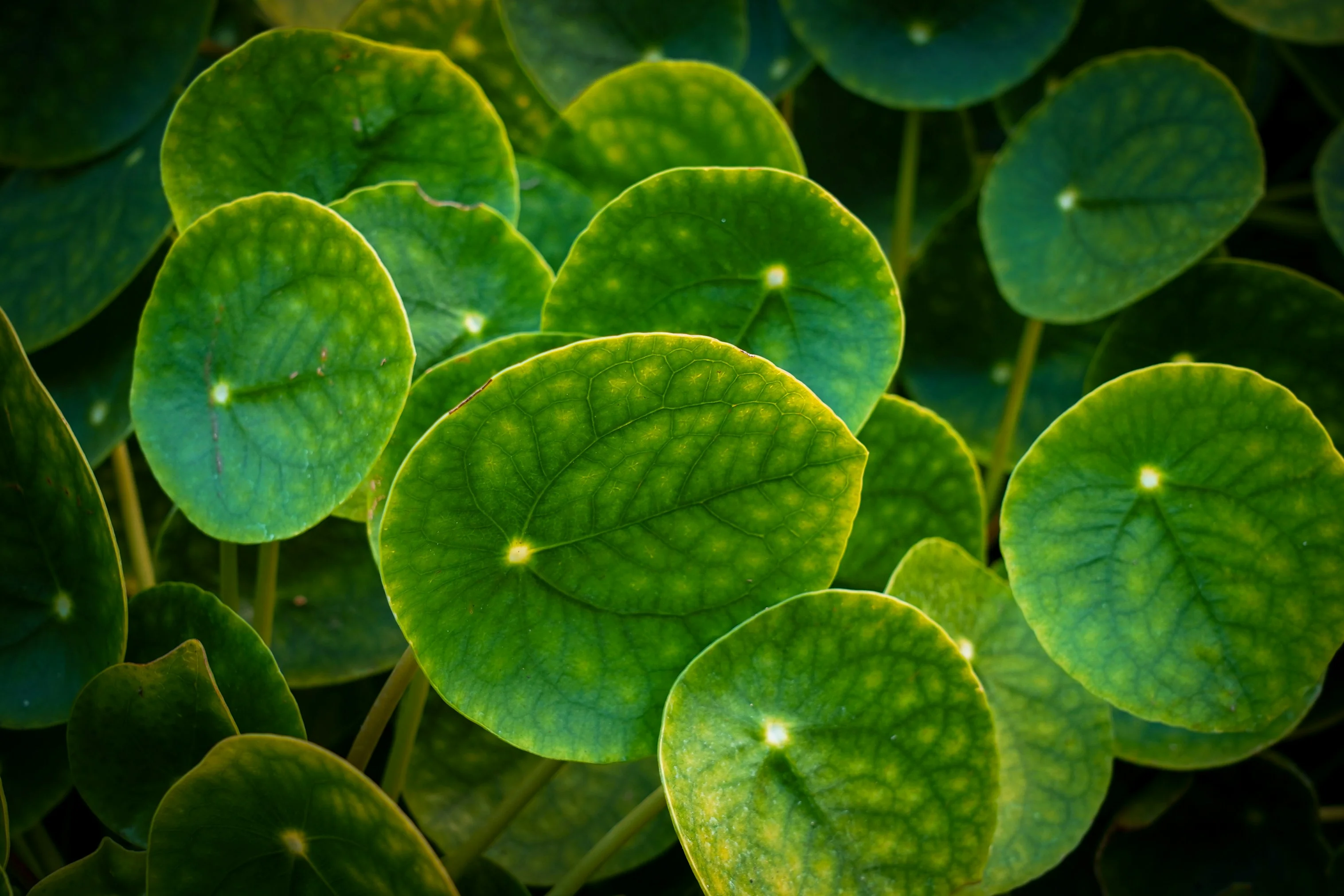
In low indoor light, the stems elongate, leaves shrink, and the plant loses the compact, umbrella-like silhouette it's known for. Bright indirect light produces the large, circular leaves on short stems that make this plant so visually striking.
Quick Answer
Place in bright indirect light, water thoroughly only when the top half of the soil is dry, and protect from cold drafts and radiators. Pilea adapts to average home humidity and is pet-safe. Reduce watering and stop fertilizer in winter to prevent yellowing leaf drop.
Light
Pilea thrives in bright, indirect light. An east or west-facing window is perfect; a south-facing exposure needs a sheer curtain to diffuse the harsh rays. The flat, umbrella-like leaves evolved to capture filtered light on forest edges in the cool mountains of Yunnan, not full tropical sun. When light levels drop in a Northern European or North American winter, the plant’s growth stalls, and the internodes stretch—this is etiolation. The leaf stems become long and floppy, and the plant loses its tight, layered silhouette. At the same time, low light drastically reduces photosynthesis, so the plant uses less water. If you keep watering as in summer, the roots sit in cold, damp soil and begin to rot. To prevent this, move the pot to the brightest window (without touching the freezing glass) and consider adding a full-spectrum LED grow light for 10–12 hours a day. Rotate the pot a quarter turn weekly so the plant does not lean permanently toward the light.
Temperature
The ideal range is 15°C to 24°C (60°F–75°F). Pilea can tolerate a brief dip to 10°C (50°F), but sustained cold, particularly when the soil is wet, is deadly. The worst-case scenario is a Pilea sitting on a single-glazed windowsill in an old apartment: the nighttime temperature near the pane can fall to near-freezing, chilling the root zone. Cold roots lose their ability to take up water, causing leaves to yellow and drop rapidly—owners often mistake this for dryness and overwater, compounding the problem. Equally damaging is the hot, dry blast from a radiator just inches below the sill, which accelerates transpiration and crisps the leaf edges. Position your Pilea at least 15 cm back from the glass in winter and well away from heat sources. In summer, air-conditioning vents can create a similar cold-draft shock; avoid direct AC airflow on the plant.
Humidity
Unlike many tropicals, Pilea adapts well to average indoor humidity (40%–60%). It can survive down to 30%, but persistently dry air from central heating will cause brown, crispy leaf tips. The mechanism is straightforward: when the surrounding air is very dry, water evaporates from the leaf cells faster than the roots can supply it, so the leaf margins die back. Grouping plants, placing a small humidifier nearby, or setting the pot on a pebble tray with water all help stabilise humidity. Misting is not required and can lead to water spots on the glossy leaves. During the coldest months, if you see brown edges appearing, refer to our brown crispy tips guide for a full diagnosis.
Watering
Watering is where most Pileas fail. The plant needs a thorough drink, but only when the top half of the potting mix has dried out. Insert your finger deep into the soil; if it feels cool and slightly damp at the second knuckle, wait a few more days. Water with tepid, filtered water until it runs out the bottom, and never leave the pot sitting in a saucer of water. In winter, the drying cycle extends dramatically—it may take 2–3 weeks between waterings. This is because shorter days and lower light reduce the plant’s metabolic activity, and cooler temperatures slow evaporation. If you overwater in winter, the water fills all the air pores in the soil. Deprived of oxygen, the roots stop functioning and quickly rot (Pythium and Phytophthora). The first sign is soft, drooping leaves that turn yellow and fall, while the soil remains damp. Catch this early by checking the pot weight: if it’s heavy and the leaves are wilting, it’s almost certainly overwatering, not under-watering.
Soil
Pilea needs a fast-draining, aerated mix that doesn’t stay soggy. A cactus or succulent blend works well straight from the bag, or you can make your own: 60% standard potting soil mixed with 30% perlite and 10% fine orchid bark. This creates macro-pores for oxygen, which the roots require even when moist. Heavy, peat-rich soils that compact over time suffocate the roots and lead to the classic “winter collapse.” The pot must have multiple large drainage holes; terracotta pots are excellent because they wick excess moisture away from the root zone.
Fertilizer
Feed monthly from March to September with a balanced liquid houseplant fertilizer (10-10-10 or 20-20-20) diluted to half the recommended strength. Pilea is not a heavy feeder, and salt buildup in the soil quickly burns root tips, causing brown, crispy leaf edges. Flush the pot with plain water every 2–3 months to leach out accumulated salts. Stop all feeding from October to February—the plant’s growth naturally slows, and adding nutrients forces weak, spindly growth that is susceptible to pests. If you see a white crust forming on the soil surface, it’s salt residue; scrape it off and leach the soil.
Propagation
The easiest and most rewarding method is by separating the offsets (pups) that sprout from the mother plant’s base. Wait until the pup is at least 5–8 cm tall and has several leaves of its own. Gently unpot the whole plant, tease the roots apart, and use a clean, sharp knife to sever the pup from the main root system, keeping as many roots attached to the pup as possible. Pot it immediately into a small container with the same well-draining mix, water lightly, and place in bright, indirect light. Leaf cuttings can also root in water, but success rates are lower. Place a healthy leaf with a short petiole in a shallow jar of filtered water; tiny roots and eventually a new plantlet will form at the base in 4–6 weeks.
Repotting
Repot every 1–2 years in early spring, just before the main growth season. Pilea likes to be slightly root-bound; only go up one pot size (2–3 cm wider). Signs it’s time include roots circling the drainage holes, the soil drying out almost immediately after watering, or the plant producing so many pups that the pot becomes overcrowded. When repotting, use fresh mix and avoid burying the main stem deeper than it was growing originally, which can cause stem rot. For detailed steps on preventing transplant stress, see our repotting shock rescue guide.
Toxicity
Pilea peperomioides is non-toxic to cats, dogs, and humans according to the ASPCA. It is perfectly safe to display on low tables or shelves where pets might reach, making it a favourite for animal lovers.
Common Problems
Yellowing leaves and leaf drop: Overwatering and/or cold temperatures. Allow soil to dry more between waterings, move to a warmer spot, and ensure the pot drains. Curling leaves: Underwatering or too much direct sun. Check soil moisture; if dry, water deeply. If soil is moist, reduce light intensity. Brown, crispy leaf edges: Low humidity from central heating, fertilizer burn, or inconsistent watering. Raise ambient humidity, flush the soil, and keep a steady routine. Leggy, elongated stems: Insufficient light. Move to a brighter location and rotate weekly. Pests: Watch for mealybugs (white cottony masses at leaf joints) and spider mites (fine webbing) in dry air. Treat with insecticidal soap or neem oil.
Recommended next actions
Next Best Actions
Use calculators and guides to turn this plant profile into a practical care routine.
Calculator
Watering Calculator
Calculate the correct watering frequency for your plant based on species, pot size, soil type, season, and climate.
Guide
Winter Houseplant Care Guide: Every Adjustment You Need to Make
Across 12 years of advising plant owners through seasonal care transitions and reviewing outcomes across more than 3,000 houseplant cases, we have identified winter as the season responsible for more preventable plant deaths than any pest, disease, or watering error — and in nearly every case, the cause is the same care routine the grower was using successfully all summer.
Guide
Humidity Tray vs Humidifier for Houseplants: What Actually Works
With over 14 years of indoor climate management across more than 1,800 diagnosed humidity-failure cases — from browning Calathea tips in air-conditioned apartments to crisping Alocasia leaves during dry winters — we've measured exactly how much humidity each method actually delivers at leaf level, and the gap is larger than most plant owners expect.
Guide
Bird of Paradise Care Guide: Light, Brown Tips, and Getting It to Bloom
Bird of Paradise plants are among the most purchased — and most misunderstood — large houseplants in Western homes. After years working with both Strelitzia reginae and Strelitzia nicolai across different indoor environments, we've documented exactly what these plants need to stay healthy, why brown tips are almost universal, and what it actually takes to get one to bloom indoors.
Calculator
Neem Oil Spray Calculator
Calculate the correct neem oil dilution ratio for your spray bottle size, plant type, and pest severity — safely and without burning leaves.
Calculator
Sunlight Calculator
Determine the ideal indoor light placement for your plant based on species, window direction, and seasonal light availability.
Structured Plant Data
Plant Data Profile
Care values below are generated from the plant JSON fields so users and crawlers can read the structured plant profile directly on the page.
Growth Characteristics
Growth Rate
moderate
Mature Height
25–35 cm (10–14 in)
Mature Spread
25–35 cm (10–14 in)
Life Cycle
Perennial
Flowering Season
Rarely flowers indoors; tiny white blooms on mature plants in spring.
Container Friendly
yes
Indoor Capable
yes
Environmental Parameters
| Parameter | Recommended | Survivable |
|---|---|---|
| Temperature | 15°C to 24°C (60°F to 75°F) | 10°C to 30°C (50°F to 85°F) |
| Humidity | 40% to 60% | 30% to 70% |
| Soil PH | 6.0 to 7.0 | 5.5 to 7.5 |
Lighting
Description
Pilea demands bright, indirect light to stay compact and produce the iconic flat, coin-like leaves. East or west-facing window is ideal; south-facing only with a sheer curtain. Low winter light causes elongated stems and leaf drop.
Nutrients
Nitrogen Demand
moderate
Phosphate Demand
moderate
Potassium Demand
moderate
Micronutrient Notes
Sensitive to fertilizer salt buildup; flush soil every 2–3 months. Pale leaves may indicate iron deficiency.
Fertilizer Frequency
Every 4 weeks from March to September with balanced liquid fertilizer diluted to half strength; no fertilizer in autumn and winter.
Organic Options
Worm castings tea, seaweed emulsion, or organic all-purpose houseplant food diluted to quarter strength.
Relationships
-
Overwatering
Vulnerability | Strength 9
Overwatering, especially in winter when the plant's water uptake slows, rapidly causes root rot and massive leaf drop. Always check soil moisture deep into the pot.
-
Cold Drafts
Vulnerability | Strength 8
Temperatures below 10°C combined with wet soil chill roots, causing yellowing leaves and sudden leaf loss. Keep away from drafty windows in winter.
Popular Pilea peperomioides Varieties for Indoor Growers
| Variety | Key Feature | Size |
|---|---|---|
| Pilea peperomioides (Classic Green) | Iconic smooth round green leaves; robust and easy to propagate | 30–35 cm tall, 30–35 cm wide |
| Pilea peperomioides 'Mojito' | Splashed with creamy yellow-green variegation; each leaf is unique | 20–30 cm tall, 20–30 cm wide |
| Pilea peperomioides 'White Splash' | Fine white speckled variegation; compact and slower growing | 20–25 cm tall, 20–25 cm wide |
Troubleshooting Guide
1 Sudden yellowing of many leaves and rapid leaf drop, especially in winter
Cause: Overwatering combined with cold root temperatures and reduced light, leading to root rot and metabolic shock.
Stop watering immediately and allow the top half of the soil to dry. Move to a warmer, brighter location away from cold drafts. If roots are black and mushy, unpot, trim away rot, and repot in fresh dry mix.
Glossary of Terms
- Offset (pup)
- A small, genetically identical daughter plant that develops at the base of the mother Pilea from adventitious buds on the rhizome or roots, naturally separating to form a new individual.
- Transpiration
- The process by which plants lose water vapour through stomatal pores in the leaves. High transpiration rates in dry heated air lead to leaf tip burn if the roots cannot replace the lost water quickly enough.