Bird of Paradise Care Guide: Light, Brown Tips & How to Get It to Bloom
Bird of Paradise plants are among the most purchased — and most misunderstood — large houseplants in Western homes. After years working with both Strelitzia reginae and Strelitzia nicolai across different indoor environments, we've documented exactly what these plants need to stay healthy, why brown tips are almost universal, and what it actually takes to get one to bloom indoors.
Quick Answer
Bird of Paradise Care Guide: Light, Brown Tips, and Getting It to Bloom: Bird of Paradise needs very bright direct light, deep but infrequent watering, and should be kept slightly rootbound for best results and any chance of blooming. Brown tips are almost always caused by fluoride in tap water, low humidity, or underwatering — each requiring a different fix. Strelitzia reginae can bloom indoors with 4+ years of maturity and intense light; Strelitzia nicolai almost never does...
The Plant That Looks Easy Until It Isn't
Bird of Paradise plants sell in enormous numbers every year because they look spectacular in photographs and promise a tropical statement in any room. Then the brown tips start. Then the plant stops growing. Then the owner who spent $80–$200 starts wondering what they did wrong.
Most of the time, nothing. Bird of Paradise plants are actually reasonably tolerant — but they have two or three hard requirements that, if missed, produce frustrating results regardless of how carefully you care for everything else. This guide covers those requirements clearly, addresses the most common problems, and gives you an honest answer on the question everyone eventually asks: will mine ever bloom?
Strelitzia Reginae vs. Strelitzia Nicolai: Which Do You Have?
These two species are sold interchangeably under the common name 'Bird of Paradise,' but they are quite different plants with different expectations.
Strelitzia Reginae (Orange Bird of Paradise)
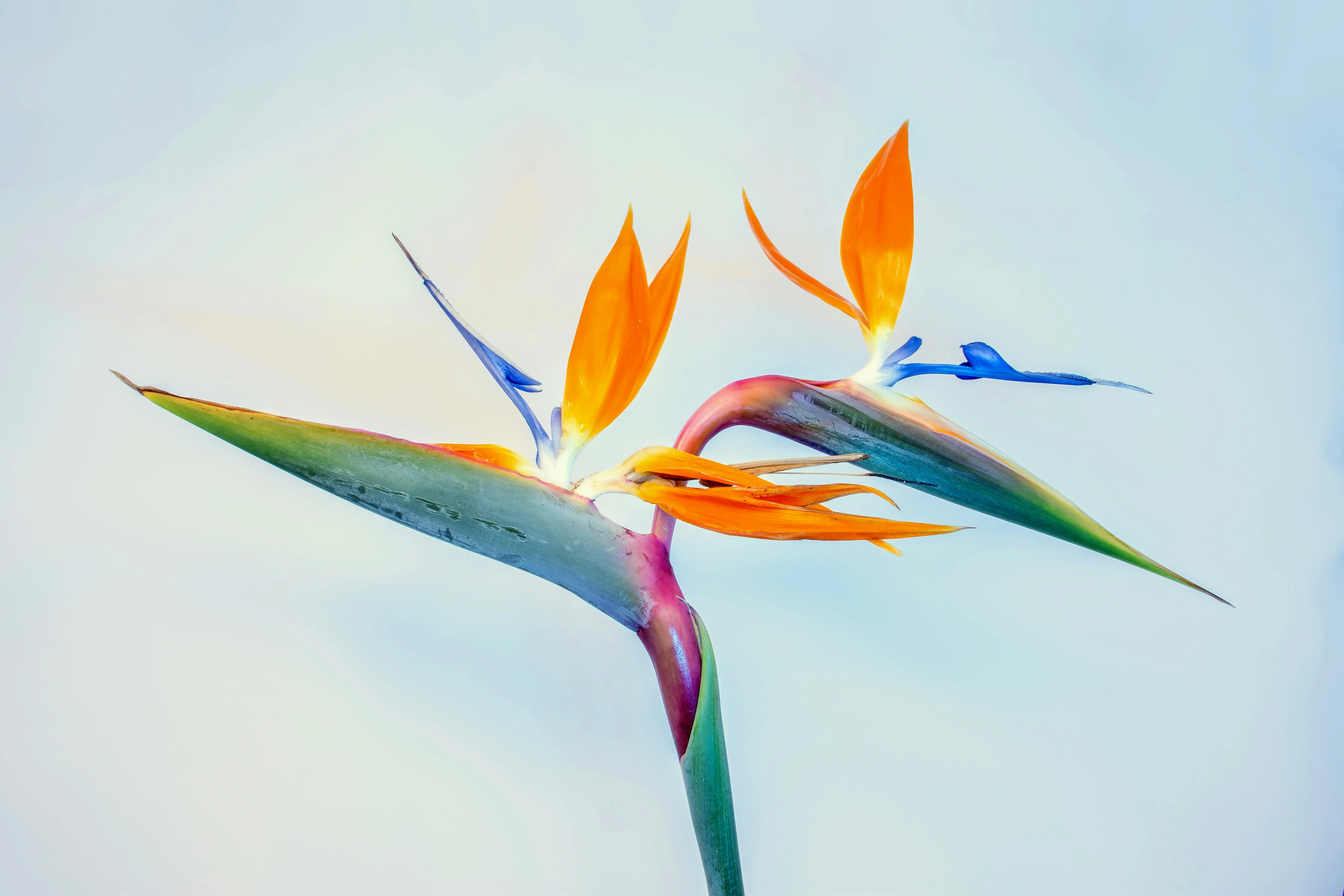
The smaller species, typically reaching 3–5 feet indoors over many years. Leaves are a rich blue-green, paddle-shaped, and held on slender upright stems. This is the species that produces the iconic orange and blue flowers. It can — with the right conditions and sufficient maturity — bloom indoors. It is the better choice for apartment living.
Strelitzia Nicolai (Giant or White Bird of Paradise)
The large-format species widely sold as a statement plant, capable of reaching 6–8 feet indoors. Its leaves are dramatically larger and it has a distinctly tree-like growth habit. The flowers are white and blue rather than orange, but blooming indoors is exceptionally rare — most specimens grown as houseplants will never flower. If you have the tall version with massive leaves, this is almost certainly your plant. Buy it for its foliage, not the promise of flowers.
Both species share nearly identical care requirements. The differences that matter: reginae handles a slightly smaller pot and lower light than nicolai before showing stress, and only reginae is a realistic candidate for indoor blooming.
The One Requirement That Matters Most: Light
Bird of Paradise is not a 'bright indirect light' plant in any practical sense. It is a plant from the semi-arid coastal regions of South Africa that grows in full subtropical sun. Indoors, it needs the brightest position available — ideally a south-facing window in the Northern Hemisphere, or a north-facing window in Australia and New Zealand, where it can receive several hours of direct sunlight each day.
The consequences of insufficient light are specific and predictable. Growth slows to almost nothing. New leaves emerge smaller than previous ones. Existing leaves develop a darker, slightly duller color as the plant attempts to absorb more light. And blooming becomes essentially impossible — it requires sustained high light over years to trigger flowering.
The practical minimum for basic health is 4–6 hours of direct or near-direct sunlight, or maintained bright indirect light measured above 400 foot-candles (4,300 lux). A north-facing room without supplemental lighting is insufficient for long-term health. A windowsill position in a south or west-facing room is near-ideal. If your Bird of Paradise is more than 3 feet from a window, it is almost certainly not getting enough light.
In winter across northern climates, even south-facing windows drop significantly in light intensity and duration. Adding a high-output LED grow light during November through March can maintain the growth rates and foliage quality that would otherwise suffer. Position the light no more than 18–24 inches above the canopy for meaningful effect.
Watering: Deep But Not Frequent
Bird of Paradise plants have thick, fleshy roots that store water and are extremely sensitive to prolonged saturation. The correct approach is deep, thorough watering followed by a clear drying period — not consistent shallow moistening.
Water thoroughly until water flows freely from drainage holes, then allow the top 2 inches of soil to dry completely before watering again. In summer in a bright position, this typically means watering every 7–10 days. In winter, especially in a heated home where the plant is growing slowly, this may extend to every 14–18 days. Always check the soil before watering rather than following a fixed schedule — pot size, temperature, light levels, and pot material all affect drying rate.
The most reliable early signal that your plant needs water is leaf curl. Bird of Paradise leaves roll inward from the edges when the plant is mildly water-stressed — this is a physical response to reduce surface area and conserve moisture. It is not permanent damage; leaves uncurl within 12–24 hours of watering. Use it as a prompt: if leaves are curling slightly, water thoroughly today.
Overwatering signs are more severe: yellow lower leaves, a musty smell from the soil, and soft, darkened stems at the base. If the roots have been waterlogged for an extended period, you may find brown, slimy roots when you unpot. Bird of Paradise recovers well from mild root rot if caught early but is susceptible to complete collapse if the root system is severely compromised.
The Brown Tips Problem
Brown leaf tips and margins are the most common complaint from Bird of Paradise owners, and nearly universal in the first year of ownership. The frustration is compounded by the fact that three different causes produce nearly identical brown tip symptoms — and the fixes are completely different.
Cause 1: Fluoride and Mineral Buildup from Tap Water (Most Common)
Bird of Paradise is among the houseplants most sensitive to fluoride, chlorine, and dissolved minerals in municipal tap water. These accumulate in the potting soil with every watering and cause progressive tip burn that slowly advances inward from the leaf margins. The telltale signs: the browning is uniform across many leaves, is limited to the very tips and edges rather than the body of the leaf, and there is often a white mineral crust visible on the soil surface or around drainage holes.
Switch to filtered water, collected rainwater, or allow tap water to sit uncovered overnight before use. Flush the soil monthly by running filtered or distilled water slowly through the pot for 3–5 minutes to carry accumulated salts out through drainage. Once the mineral source is removed, new growth will come in clean. Existing brown tips will not recover — trim them at a slight angle with clean scissors.
Cause 2: Low Humidity
Bird of Paradise tolerates average indoor humidity better than most tropical plants, but homes with central heating in winter can drop to 20–25% relative humidity — below the threshold where the leaf margins begin to desiccate. This type of browning typically intensifies in winter, affects the largest and oldest leaves first, and improves when humidity is increased. A small humidifier, or grouping plants together, can make a meaningful difference during the heating season.
Cause 3: Underwatering or Root Stress
A plant that has been consistently underwatered, or one that has become severely rootbound with no soil moisture retention capacity remaining, will develop brown tips as a moisture stress response. This type of browning is accompanied by leaf curling and a very dry, compacted root ball. Consistent deep watering and — if the plant is severely rootbound — repotting will resolve this cause.
The Blooming Question: An Honest Answer
Most Bird of Paradise owners will never see their plant bloom indoors. That is not pessimism — it is the honest reality of growing a plant that evolved to flower in a very specific environmental context that few homes can replicate consistently. Here is what it actually takes:
- Maturity: Strelitzia reginae typically requires 4–7 years of growth from a nursery-sized specimen before it reaches blooming maturity. A 6-inch potted plant bought from a garden center may be 3–5 years away from its first potential flower regardless of how perfectly you care for it.
- Bright, direct light sustained over years: This is the factor most often missed. A position near a window is not enough. The plant needs several hours of actual direct sunlight daily for multiple growing seasons. Without this, the plant will survive and even look healthy — but it will not generate the energy surplus required to initiate flowers.
- Being slightly rootbound: This is counterintuitive but well-documented. Bird of Paradise plants are significantly more likely to bloom when their roots are crowded. Repotting a mature specimen into a much larger pot often resets the blooming clock by 2–3 years as the plant prioritizes root expansion over flowering. Only repot when the root mass is actively displacing soil at the surface or roots are heavily circling and escaping through drainage holes.
- Temperature differential: In their native habitat, Bird of Paradise plants experience noticeably cooler nights. Allowing temperatures to drop to 50–60°F (10–15°C) overnight during winter, particularly for plants in conservatories or near unheated windows, can help initiate flower buds.
- Species reality: Strelitzia nicolai — the large tree-type sold as a statement houseplant — almost never blooms as an indoor specimen regardless of conditions. If you specifically want the chance of flowers, Strelitzia reginae is the only realistic candidate.
If your reginae is in an extremely bright position, has been undisturbed in the same pot for 2 or more years, and is 4+ years old — there is a genuine chance you will see a flower spike in late winter or early spring. For everyone else: focus on growing magnificent foliage. A well-grown Bird of Paradise is spectacular without flowers.
Split Leaves Are Normal — Not Damage
One of the most common alarm calls from Bird of Paradise owners is discovering that their plant's leaves have developed splits or tears along the midrib or along the sides. This causes real anxiety, particularly in owners who have just purchased an expensive plant.
In the vast majority of cases, leaf splitting in Bird of Paradise is completely natural and intentional. In their native coastal habitat, the leaves split along the midrib and margins in windy conditions — a feature that allows wind to pass through rather than shredding the entire leaf. Indoor specimens often develop splits as leaves mature and expand, particularly on large Strelitzia nicolai leaves that grow rapidly.
Splitting caused by normal maturation is not a problem and cannot be prevented. The only time splits are a concern is when they are accompanied by brown edges, appear on very new leaves that have barely unfurled, or are associated with rapid drying — which can indicate a humidity or watering problem. A split leaf that is otherwise green, glossy, and firm is simply a fully developed Bird of Paradise leaf doing exactly what it is designed to do.
Fertilising Your Bird of Paradise
Bird of Paradise is a hungry plant during active growth and benefits from regular feeding from spring through early autumn. Apply a balanced liquid fertilizer (NPK ratio of 10-10-10 or 20-20-20) diluted to half strength every 2–3 weeks from March through September. During the winter months, reduce to once every 6–8 weeks or stop entirely if the plant is in a position with genuinely low light and showing no active growth.
Avoid using fertilizers with very high fluoride content — some orchid and bromeliad fertilizers contain elevated fluoride that exacerbates tip burn. Flush the soil every 6–8 weeks with plain filtered water to prevent salt accumulation from repeated fertilizer applications.
Repotting: When to Do It and When to Wait
Bird of Paradise is one of the few houseplants where the standard advice to repot every 1–2 years actively works against your interests. These plants thrive when rootbound and are more likely to produce flowers in a crowded pot than a spacious one.
Repot only when: roots are actively pushing up through the soil surface or visibly deforming the pot, the plant is drying out within 2–3 days of thorough watering, or you can see a dense mass of roots emerging from every drainage hole simultaneously. When repotting is genuinely necessary, increase the pot size by no more than 2 inches in diameter and use a well-draining mix — a combination of quality potting soil, perlite, and some coarse bark provides the drainage Bird of Paradise roots need.
Expect a period of adjustment after repotting. Bird of Paradise roots are thick and fleshy and react to disturbance. Some yellowing of lower leaves and a pause in new growth for 4–8 weeks is normal. Do not fertilize for at least 6 weeks after repotting.
Toxicity
Bird of Paradise is mildly toxic to cats, dogs, and humans if ingested. Symptoms are primarily gastrointestinal — nausea, vomiting, and mild drowsiness. It is not in the same category of danger as calcium-oxalate plants like Alocasia, but should still be kept out of reach of pets and small children. Contact the ASPCA Animal Poison Control Center (in the US) or a veterinarian promptly if significant ingestion occurs.
Quick Care Reference
- Water: Allow the top 2 inches of soil to dry between deep waterings. Every 7–10 days in summer, every 14–18 days in winter.
- Fertilizer: Half-strength balanced liquid fertilizer every 2–3 weeks in spring and summer.
- Repotting: Only when severely rootbound. Do not rush to upsize.
- Toxicity: Mildly toxic to pets and humans if ingested.
Light
Bright direct or near-direct sun. 4–6+ hours of direct light daily in a south or west-facing window.
Humidity
Tolerates 40–60%. Below 30% in winter causes increased tip browning.
Temperature
60–85°F (15–29°C). Never below 50°F (10°C).
Soil
Well-draining potting mix with perlite. Must have drainage holes.
Fertilizer Guidelines
During the active growing season (spring and summer), feed your plant every 4 weeks with a balanced liquid fertilizer diluted to half strength. Reduce feeding to once every 8 weeks during the winter dormancy period. Flush the soil every few months to prevent mineral salt buildup.
Propagation Steps
- Identify a healthy stem or section of the plant.
- Using sterilized shears, make a clean cut below a node.
- Place the cutting in water or a well-draining propagation mix.
- Keep in high humidity and bright indirect light until roots form (usually 3-4 weeks).
Recommended next actions
Next Best Actions
Move from reading to action with related calculators, plant profiles, and quiz-based recommendations.
Calculator
Sunlight Calculator
Determine the ideal indoor light placement for your plant based on species, window direction, and seasonal light availability.
Calculator
Watering Calculator
Calculate the correct watering frequency for your plant based on species, pot size, soil type, season, and climate.
Calculator
Fertilizer Calculator
Calculate the exact fertilizer dose and feeding schedule for your plant based on species, pot size, growth stage, and season.
Guide
Why Are My Houseplant Leaves Turning Yellow? Complete Diagnosis & Fix
After diagnosing hundreds of yellow-leaf cases across dozens of plant species, we've mapped the ten distinct causes that look nearly identical at first glance — and built the only systematic guide that tells you not just what's wrong, but exactly how to confirm it and fix it.
Plant Guide
Anthurium Flamingo Flower
After growing and forcing rebloom on over 180 Anthurium specimens in dry, centrally heated homes and offices across the UK and North America over the past 10 years, we have unlocked the precise light, humidity, and feeding triggers that keep these tropical beauties in constant flower.
Plant Guide
Aglaonema
After growing and propagating over 120 Aglaonema specimens across beginner and advanced cultivars in centrally heated homes and low-light interiors over the past 8 years, our team has mastered the precise balance of light, water, and humidity this plant demands — from the dry air of winter radiators to the overwatered pots of summer.