Jade Plant Care Guide: The Complete Succulent and Vastu Placement Manual
Crassula ovata
A compact, long-lived succulent known for its fleshy leaves, luck-bringing symbolism, and beginner-friendly care requirements.
-
Light
Requires ample bright light to maintain compact growth and prevent stretching.
-
Temperature
18-24°C (65-75°F)
-
Growth
slow
-
pH range
6.0-6.5
Quick Answer
Jade Plants require bright, indirect sunlight and a fast-draining succulent soil mix. Because they store water in their leaves, only water them when the soil is completely dry to prevent root rot.
Vastu Placement
Vastu Placement and Practical Fit
In Vastu Shastra, the Jade Plant is celebrated as a 'wealth magnet'. Placing it in the South-East direction (the wealth and Venus zone) or near the entrance attracts financial stability, business success, and positive energy.
Best Directions
South East, East
Best Rooms
Entrance, Living Room, Office
Light Range
Bright Indirect, Morning Sun
Care Profile
Beginner | Not pet safe | Indoor suitable
Common Goals
Reference: https://www.rhs.org.uk/plants/crassula
Overview
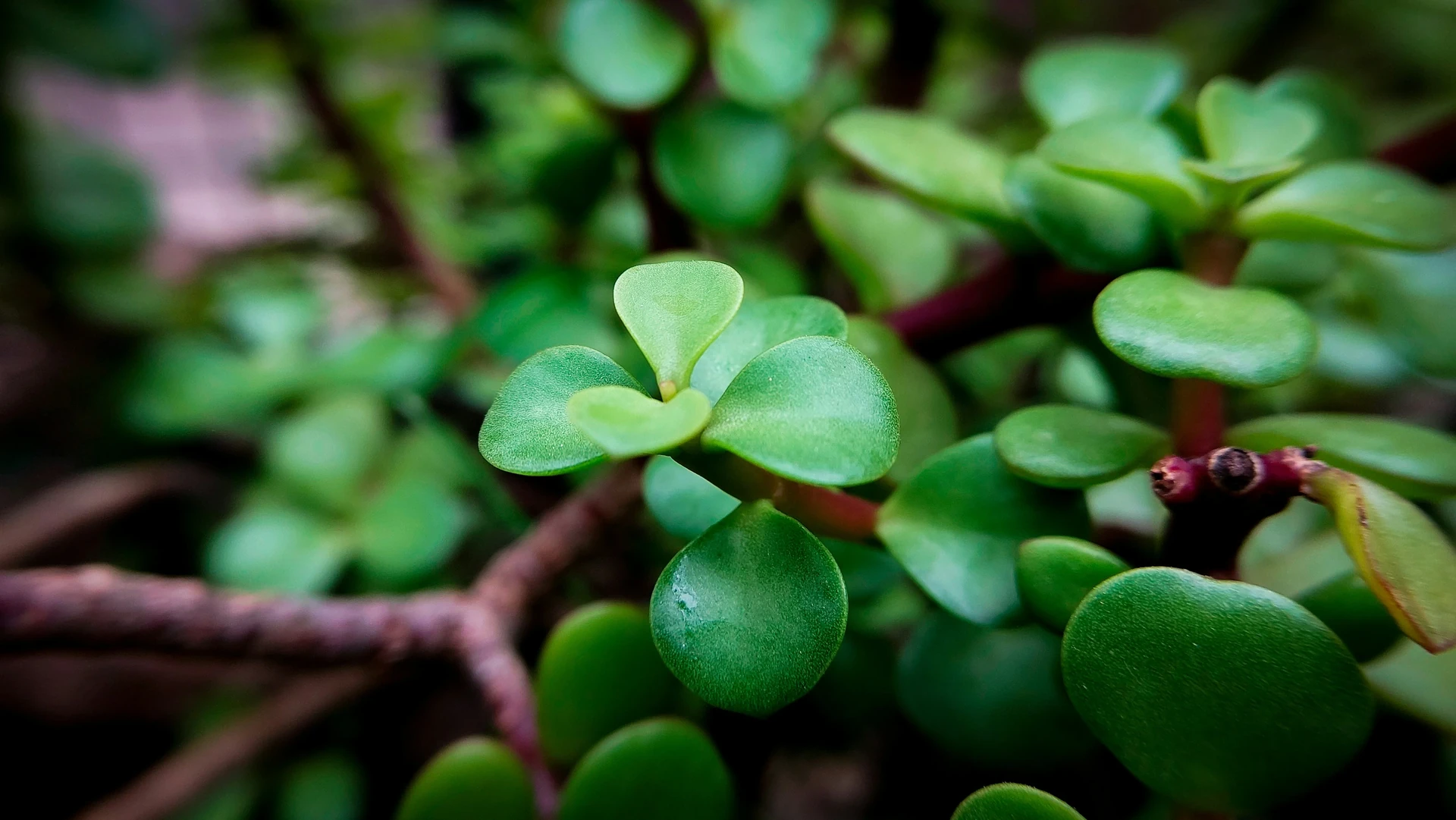
The Jade Plant (Crassula ovata) is a beloved succulent houseplant recognized by its thick, woody stems and fleshy, oval-shaped green leaves. Native to the dry regions of South Africa, it has adapted to store water in its foliage, making it incredibly resilient and forgiving of occasional neglect.
Often referred to as the 'Money Plant' or 'Lucky Plant', it holds a prominent place in Vastu Shastra and Feng Shui, where it is traditionally gifted to bring prosperity and financial success to new businesses and homes.
Light and Placement
Jade Plants require bright light to thrive. Indoors, a south or east-facing window is ideal. They enjoy direct morning sunlight but should be protected from the harsh, scorching rays of the afternoon summer sun, which can cause leaf burn.
If your Jade Plant begins to develop a red tinge around the edges of its leaves, this is a natural and healthy response to high light levels. Conversely, if it starts stretching and looking 'leggy', it desperately needs more light.
Watering Strategy
The golden rule for Jade Plants is the 'Soak and Dry' method. Because they store water in their leaves, they do not need constant moisture. Water the plant thoroughly until water drains from the bottom of the pot, then empty the saucer. Do not water again until the soil is 100% dry.
During the winter months, the plant's growth slows down significantly, and it may only need watering once every 4 to 6 weeks.
Soil and Potting Mix
Excellent drainage is non-negotiable. Standard potting soil will hold too much moisture and rot the roots. Use a specialized cactus or succulent mix, or create your own by mixing regular potting soil with equal parts perlite, coarse sand, or pumice.
Because Jade Plants can become top-heavy as they grow, planting them in a heavy, unglazed terracotta pot is highly recommended. The terracotta also wicks away excess moisture, providing a safeguard against overwatering.
Common Problems and Troubleshooting
The majority of issues stem from overwatering. If the leaves turn yellow, become translucent, and fall off easily, stop watering immediately and check the roots for rot.
Pest-wise, keep an eye out for mealybugs—tiny, white, cotton-like masses that hide in the joints where leaves meet the stem. Wipe them away with a cotton swab dipped in rubbing alcohol.
Recommended next actions
Next Best Actions
Use calculators and guides to turn this plant profile into a practical care routine.
Guide
Why Watering Your Plants at Night is Killing Them: Best Watering Practices Guide
After professionally managing thousands of indoor houseplants and outdoor garden beds over the last 10 years, we've identified nighttime watering as the number one preventable cause of fatal fungal diseases.
Calculator
Sunlight Calculator
Determine the ideal indoor light placement for your plant based on species, window direction, and seasonal light availability.
Quiz
Get My Plant Map
Answer a short placement quiz for direction, room, light, and care-fit recommendations.
Guide
Calathea Orbifolia Care Guide: Growing the Most Stunning Prayer Plant
After cultivating over 50 Calatheas and maintaining high-humidity greenhouse environments for 5 years, we have mastered the art of keeping Calathea Orbifolia thriving indoors without brown edges.
Guide
Philodendron Care Guide: Growing Trending Varieties in 2026
After successfully growing and propagating over 200 Philodendron plants across 8 years, we've created this complete care guide covering trending varieties like Pink Princess, Birkin, Congo Rojo, and Brasil.
Calculator
Heat Stress Diagnosis Calculator
Diagnose plant heat stress risk from your temperature, humidity, sunlight exposure, and symptoms — then get specific watering, shade, and airflow actions.
Structured Plant Data
Plant Data Profile
Care values below are generated from the plant JSON fields so users and crawlers can read the structured plant profile directly on the page.
Growth Characteristics
Growth Rate
slow
Mature Height
3-6 feet (indoors typically 1-3 feet)
Mature Spread
2-3 feet
Life Cycle
Perennial
Flowering Season
Winter to early spring (rare indoors)
Container Friendly
yes
Indoor Capable
yes
Environmental Parameters
| Parameter | Recommended | Survivable |
|---|---|---|
| Temperature | 18-24°C (65-75°F) | 10-35°C (50-95°F) |
| Humidity | 30-50% | 20-60% |
| Soil PH | 6.0-6.5 | 5.5-7.0 |
Lighting
Description
Requires ample bright light to maintain compact growth and prevent stretching.
Nutrients
Nitrogen Demand
low
Phosphate Demand
low
Potassium Demand
low
Micronutrient Notes
Requires very little feeding. Over-fertilizing can cause leggy, weak growth.
Fertilizer Frequency
Feed once every 2-3 months during the active growing season (spring and summer) with a diluted succulent fertilizer.
Organic Options
Worm castings mixed lightly into the topsoil annually.
Relationships
-
Sunlight
Requirement | Strength 9
Insufficient light causes etiolation (stretching) and weak, drooping stems.
-
Overwatering
Vulnerability | Strength 10
The primary cause of death. Sitting in wet soil rapidly leads to root and stem rot.
-
Mealybugs
Vulnerability | Strength 7
Prone to mealybug infestations in the crevices between leaves and stems.
Jade Plant Growing Environments
| Placement | Light Level | Watering Need | Growth Habit |
|---|---|---|---|
| South-Facing Window | High (Direct Morning Sun) | Moderate | Compact, sturdy, red-tinged leaves |
| East-Facing Window | Medium-High (Bright Indirect) | Low | Healthy, deep green, steady growth |
| Office Desk / Deep Indoors | Low | Very Low | Leggy, weak stems, drooping leaves |
Troubleshooting Guide
1 Yellow, mushy leaves falling off
Cause: Overwatering or poor soil drainage
Stop watering immediately. Allow the soil to dry completely. If the stem is black/squishy, take cuttings from the healthy top to propagate and discard the rotted base.
2 Wrinkled, shriveled leaves
Cause: Underwatering
Give the plant a deep, thorough watering. The leaves should plump up within 24-48 hours.
3 Leggy, stretched stems
Cause: Insufficient light
Move the plant to a brighter location. Prune the stretched stems to encourage compact, bushy regrowth.
4 White, cottony fuzz on stems
Cause: Mealybugs
Dab the bugs with a cotton swab soaked in isopropyl alcohol, or spray the plant with neem oil.
5 Brown, dry spots on leaves
Cause: Sunburn
Move the plant slightly away from intense, direct afternoon sunlight.
Glossary of Terms
- Etiolation
- The process where a plant grows weak, spindly, and pale due to lack of sufficient light, stretching toward the nearest light source.
- Callus
- The hardened, dry tissue that forms over a wound or cut on a plant (like a stem cutting), helping to prevent infection and rot before planting.
- Succulent
- Plants that have thickened, fleshy parts adapted to retain water in arid climates or soil conditions.
Scientific References
- Crassula ovata - Royal Horticultural Society
- Growing Jade Plants - University of Wisconsin-Madison Extension