Ficus Benjamina Care Guide: How to Stop Leaf Drop
Ficus benjamina
A classic indoor tree known for its elegant, weeping branches and glossy foliage, making a striking statement in bright rooms.
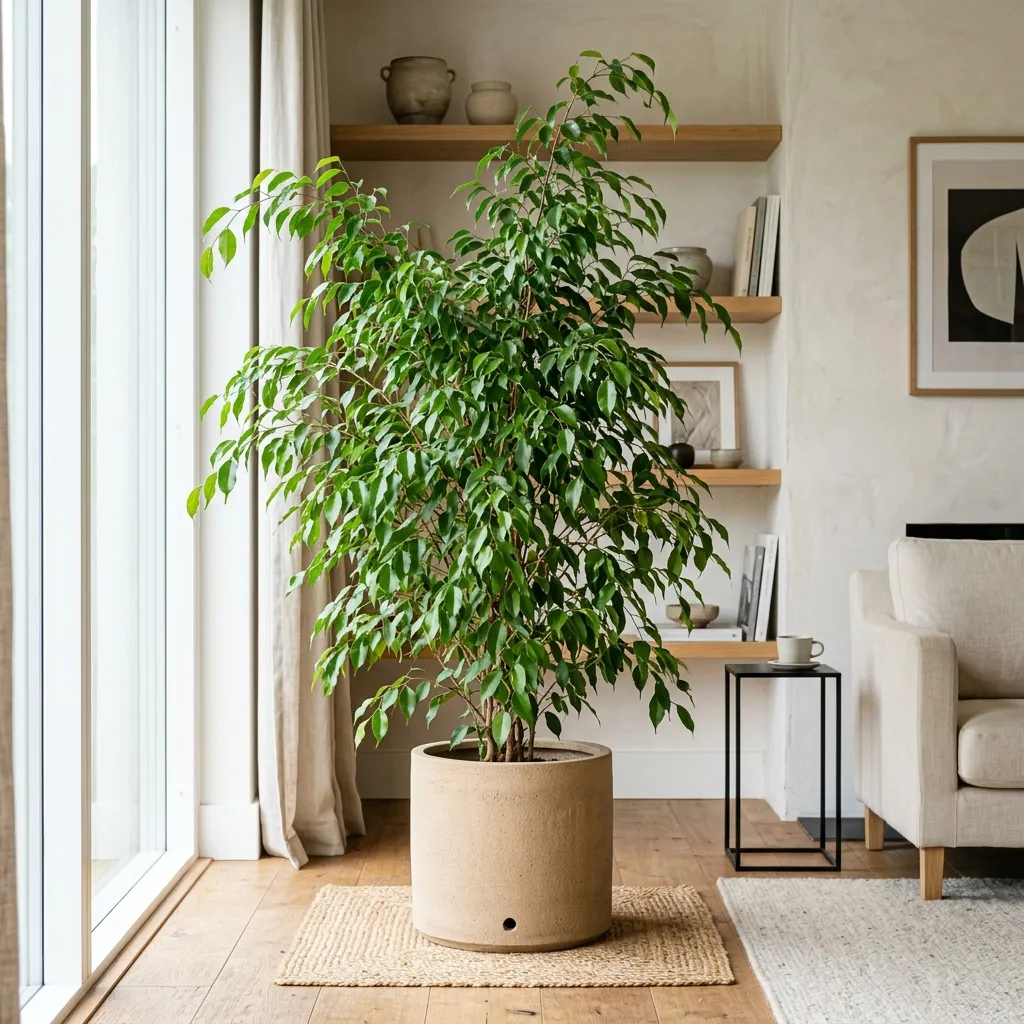
-
Light
Requires bright, indirect sunlight to maintain its dense foliage. Will drop leaves if light levels are too low.
-
Temperature
65-80°F (18-27°C)
-
Growth
fast
-
pH range
6.0-6.5
Quick Answer
Provide your Ficus Benjamina with bright indirect light, water only when the top 3 inches of soil are dry, and never move it to prevent sudden leaf drop.
Overview
The Ficus Benjamina, commonly known as the Weeping Fig, is a staple of interior design. In 2026, it is seeing a massive resurgence as people seek large, sculptural statement plants for their homes. Native to Asia and Australia, this elegant tree can live for decades indoors with the right care.
Understanding Leaf Drop
The most famous trait of the Ficus Benjamina is its dramatic tendency to drop leaves. This is a stress response. If you move the plant, change its watering schedule, or expose it to a draft from an AC vent, it will shed leaves. The key to success is finding a bright, stable location and resisting the urge to move it.
Light Requirements
Weeping Figs require a massive amount of bright, indirect light to maintain their dense canopies. If the light is too low, the plant will look sparse and leggy. Placing it directly in front of an East-facing window is usually ideal.
Watering and Soil
Keep the soil evenly moist during the spring and summer, allowing the top couple of inches to dry before watering again. Ensure your potting mix is rich but well-draining, and never let the pot sit in standing water to prevent root rot.
Recommended next actions
Next Best Actions
Use calculators and guides to turn this plant profile into a practical care routine.
Guide
Why Watering Your Plants at Night is Killing Them: Best Watering Practices Guide
After professionally managing thousands of indoor houseplants and outdoor garden beds over the last 10 years, we've identified nighttime watering as the number one preventable cause of fatal fungal diseases.
Guide
Heatwave Plant Protection Guide: How to Save Your Plants from Extreme Heat
After managing commercial nurseries through intense triple-digit summers for over 15 years, we have developed proven, lifesaving strategies to protect fragile houseplants and vulnerable outdoor gardens from extreme heatwaves.
Guide
Thai Constellation Monstera Care Guide: Growing the Variegated Star Plant
Having cultivated and propagated over 100 rare Monsteras over the past 7 years, we have developed a proven method for maximizing the growth and stable variegation of the highly sought-after Thai Constellation Monstera.
Calculator
Sunlight Calculator
Determine the ideal indoor light placement for your plant based on species, window direction, and seasonal light availability.
Calculator
Fertilizer Calculator
Calculate the exact fertilizer dose and feeding schedule for your plant based on species, pot size, growth stage, and season.
Calculator
Watering Calculator
Calculate the correct watering frequency for your plant based on species, pot size, soil type, season, and climate.
Structured Plant Data
Plant Data Profile
Care values below are generated from the plant JSON fields so users and crawlers can read the structured plant profile directly on the page.
Growth Characteristics
Growth Rate
fast
Mature Height
3-6 feet indoors
Mature Spread
2-3 feet
Life Cycle
Perennial
Flowering Season
Rarely flowers indoors
Container Friendly
yes
Indoor Capable
yes
Environmental Parameters
| Parameter | Recommended | Survivable |
|---|---|---|
| Temperature | 65-80°F (18-27°C) | 55-85°F (13-29°C) |
| Humidity | 50-70% | 30-80% |
| Soil PH | 6.0-6.5 | 5.5-7.0 |
Lighting
Description
Requires bright, indirect sunlight to maintain its dense foliage. Will drop leaves if light levels are too low.
Nutrients
Nitrogen Demand
high
Phosphate Demand
moderate
Potassium Demand
moderate
Micronutrient Notes
Benefits from regular feeding during the active growing season.
Fertilizer Frequency
Feed monthly during spring and summer with a balanced liquid fertilizer.
Organic Options
Top dress with compost or use organic liquid plant food.
Relationships
-
Leaf Drop
Vulnerability | Strength 10
Notoriously prone to dropping its leaves when its environment changes, especially regarding light or temperature drafts.
Popular Ficus Varieties Compared
| Variety | Appearance | Care Difficulty |
|---|---|---|
| Weeping Fig (F. benjamina) | Small, elegant leaves on weeping branches | Moderate (prone to leaf drop) |
| Rubber Tree (F. elastica) | Large, thick, glossy burgundy or green leaves | Easy (very resilient) |
| Fiddle Leaf Fig (F. lyrata) | Massive, violin-shaped dramatic leaves | Advanced (highly sensitive) |
Troubleshooting Guide
1 Massive leaf drop
Cause: Environmental shock from moving, cold drafts, or severe underwatering.
Ensure the plant is out of drafts, placed in bright light, and leave it alone to recover.
Glossary of Terms
- Leaf Drop
- A severe stress response where a plant rapidly sheds its leaves in reaction to a change in environment, such as lighting, watering, or cold drafts.
- Latex Sap
- The milky white fluid produced by plants in the Moraceae family when cut or damaged. It contains compounds that are toxic to pets and irritating to human skin.
Scientific References
- Ficus Benjamina - RHS