Fiddle Leaf Fig Care Guide: How to Grow Ficus Lyrata Indoors Without the Drama (2026)
After growing and recovering fiddle leaf figs across eight years — including plants that dropped half their leaves the week after purchase — we've identified the exact triggers behind leaf drop and the straightforward conditions that keep Ficus lyrata thriving long-term.
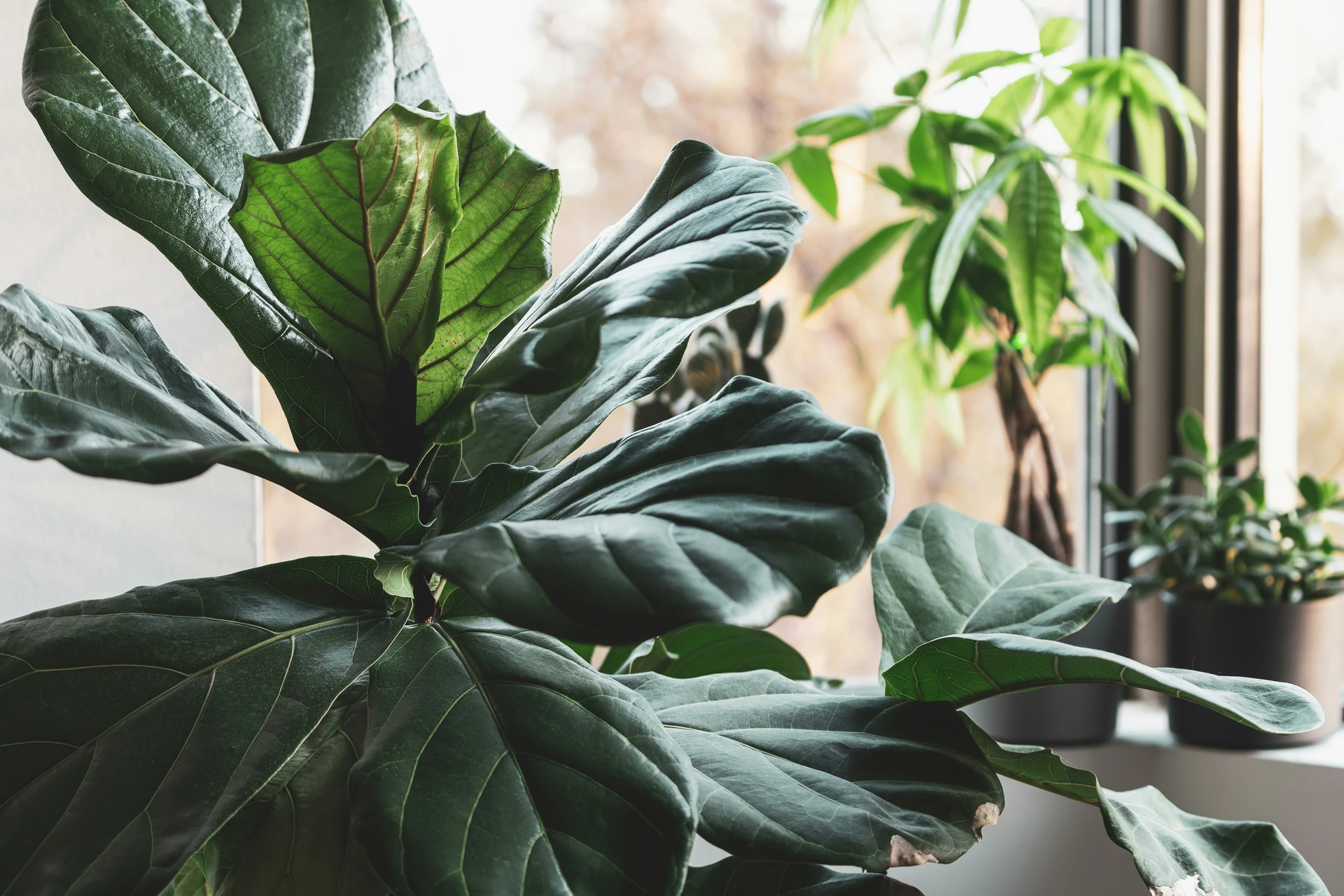
Quick Answer
Fiddle Leaf Fig Care Guide: Place your Ficus lyrata within 1–2 metres of a bright window, water only when the top 3–5 cm of soil has dried out, maintain humidity above 40%, and never move the plant once it has settled. Avoid cold drafts, direct summer sun, and inconsistent watering — these are the primary triggers behind the leaf drop this species is notorious for.
The Truth About the Fiddle Leaf Fig's Reputation
No other houseplant generates as much anxiety per square foot as the fiddle leaf fig. Search any plant forum and you will find pages of panicked posts from owners whose plants dropped leaves overnight, developed mysterious brown spots, or simply stopped growing. Having grown and recovered fiddle leaf figs for eight years — including plants inherited in genuinely terrible condition — we can say with confidence that the drama is real, but it is also almost entirely preventable. The plant is not randomly temperamental. It responds to specific, identifiable triggers, and once you understand those triggers, it becomes one of the most rewarding large-format houseplants you can grow indoors.
Ficus lyrata is native to the tropical rainforests of west Africa, particularly lowland regions of countries including Cameroon, Sierra Leone, and Nigeria, where it grows as a large canopy tree reaching heights of 12–15 metres (40–50 feet). Indoors it typically reaches 1.5–3 metres (5–10 feet), making it one of the tallest achievable houseplants in a standard home. That height and the large, glossy, violin-shaped leaves are why interior designers and plant lovers keep choosing it despite the care demands.
Common Fiddle Leaf Fig Varieties
Ficus Lyrata (Standard)
The classic form grown for its large, dramatic fiddle-shaped leaves. Under good conditions a single leaf can reach 45 cm (18 inches) long and 30 cm (12 inches) wide. The standard form is the most widely available and the most forgiving of the cultivars.
Ficus Lyrata 'Bambino'
A dwarf cultivar that stays compact, typically reaching 60–90 cm (2–3 feet) indoors. The leaves are smaller and more rounded than the standard variety. It is better suited to smaller spaces and slightly more tolerant of lower light levels, making it a good choice for apartment growers.
Ficus Lyrata 'Compacta'
A bushier, denser form that produces tighter leaf clusters than the standard tree form. It grows more slowly and maintains a fuller, shrub-like silhouette rather than a bare trunk with a top canopy. Good for growers who prefer the foliage look over the tree form.
The Single Most Important Thing to Understand About Fiddle Leaf Figs
Fiddle leaf figs are extreme creatures of habit. They adapt to their environment over several weeks and then expect that environment to stay consistent. Every significant change — a new location, a draft from an open window, the heating switching on for winter, being moved to a new home, even being rotated too aggressively — can trigger defensive leaf drop. This is not the plant dying. It is the plant shedding leaves it has decided it can no longer support under the new conditions while it recalibrates.
The practical implication is simple: choose your spot carefully before you buy, introduce the plant to that spot immediately, and then do not move it. Rotating it a quarter turn once a month for even light distribution is fine. Relocating it to a different room is not, unless you are prepared to manage a period of adjustment stress.
Essential Care Requirements
Temperature
65–75°F (18–24°C) is the ideal indoor range. Fiddle leaf figs are particularly sensitive to cold and drafts — keep them well away from exterior doors, draughty windows, and air conditioning vents that direct cold air directly at the leaves. Temperatures below 55°F (13°C) will cause rapid leaf drop. Sudden temperature fluctuations, even within the acceptable range, can also trigger stress responses.
Humidity
40–60% is the comfortable range. Fiddle leaf figs originate from humid rainforest environments and will develop brown, crispy leaf edges in air that is chronically dry, particularly during winter when indoor heating drops ambient humidity significantly. A humidifier placed nearby is the most reliable solution; misting offers only short-term surface moisture and can actually encourage fungal problems on the leaves if water sits in the leaf folds.
Light
Bright, indirect light is the requirement, and this plant is not flexible about it. Place it within 1–2 metres (3–6 feet) of a large south- or east-facing window (in the Northern Hemisphere) that receives several hours of bright ambient light daily. A west-facing window works with a sheer curtain to filter harsh afternoon sun. Direct summer sun through unfiltered glass will scorch the large leaves quickly. Low light is where fiddle leaf figs consistently decline — slow growth, small new leaves, and eventual leaf drop follow within months. If your home lacks bright natural light, this is not the right plant for your conditions.
Watering
Allow the top 3–5 cm (1–2 inches) of soil to dry before watering again. Depending on pot size, light levels, and season, this typically means watering every 7–10 days in summer and every 14–18 days in winter. Water thoroughly, allowing it to drain completely from the base, then empty the saucer. Never leave the pot sitting in water — root rot is one of the two most common causes of fiddle leaf fig decline, and it develops silently before the leaves show any symptoms. Consistency matters: erratic watering (drought followed by drenching) stresses the root system and triggers leaf drop more reliably than almost anything else.
Soil
Well-draining, aerated potting mix is essential. A reliable blend is 60% quality potting mix combined with 30% perlite and 10% coarse bark chips. This gives the roots access to moisture and nutrients without staying waterlogged. Avoid any mix containing moisture-retaining crystals or water-locking gels — these are marketed as a convenience feature but dramatically increase root rot risk for moisture-sensitive plants like Ficus lyrata.
Pot Choice
Terracotta pots are strongly preferred for fiddle leaf figs because they are porous and allow excess moisture to evaporate through the walls. This provides a meaningful buffer against overwatering. Plastic or glazed ceramic pots hold moisture longer, which increases rot risk. Whatever pot you choose, drainage holes are non-negotiable — never grow a fiddle leaf fig in a pot without them, regardless of how attractive the container is.
Understanding Brown Spots: Overwatering vs. Bacterial Infection
Brown spots are the most alarming symptom fiddle leaf fig owners encounter, and correctly identifying the cause is the difference between a simple fix and a plant that continues to decline. The two most common causes produce distinctly different patterns.
Brown spots from overwatering or root rot typically appear near the edges of the leaf or in irregular patches throughout the leaf surface. They are often accompanied by yellowing around the brown area and may feel soft or slightly mushy when touched. Multiple leaves across the plant are usually affected simultaneously. The fix is to allow the soil to dry out more completely between waterings and to inspect the roots for rot — healthy roots are white and firm; rotted roots are brown or black and soft.
Brown spots from bacterial infection (most commonly Xanthomonas) appear as irregular dark brown spots often surrounded by a yellow halo, and they typically start on the edges of lower leaves first. Bacterial infection is usually introduced by overwatering combined with poor air circulation. Treatment involves removing affected leaves with sterile scissors, improving airflow around the plant, and reducing watering immediately. In severe cases, a copper-based bactericide may help slow the spread.
Fertilizing Fiddle Leaf Figs
During the growing season (March through September in the Northern Hemisphere), feed monthly with a liquid fertilizer formulated specifically for fiddle leaf figs or a balanced NPK 3-1-2 ratio fertilizer diluted to the recommended strength. The higher nitrogen component supports the large leafy growth this plant produces. Do not fertilize in autumn or winter when growth slows — pushing nutrients into a plant that is not actively growing leads to salt accumulation in the soil and root burn. Flush the soil with plain water every 2–3 months to clear any accumulated fertilizer salts, particularly if you notice white deposits forming on the soil surface.
Step-by-Step Propagation Guide
- Take a stem cutting of 15–20 cm (6–8 inches) with at least 2–3 leaves attached. Make the cut cleanly just below a node using sterile pruning shears.
- Allow the milky sap (latex) that emerges from the cut to dry and seal for 30–60 minutes before placing the cutting in water. Ficus sap can irritate skin and eyes — wear gloves.
- Place the cutting in a clean glass of room-temperature water, submerging the stem but keeping the leaves above the waterline. Position in bright indirect light.
- Change the water every 5–7 days to prevent bacterial buildup. Roots typically appear within 4–8 weeks.
- Once roots reach 3–5 cm (about 2 inches), pot the cutting into a small container with well-draining mix. Keep humidity high for the first 2–3 weeks using a humidity dome or clear plastic bag loosely placed over the cutting.
- Note that Ficus lyrata propagation has a lower success rate than many other tropical houseplants — expect some cuttings not to root, and take multiple cuttings to improve your odds.
Repotting Guide
Repot every 2–3 years, or when roots begin to visibly circle the base of the pot or emerge from drainage holes. Spring is the ideal window. Choose a pot only 3–5 cm (1–2 inches) larger in diameter — going significantly larger increases the volume of wet soil around the roots and raises rot risk. Handle the root ball gently during repotting, as root disturbance is a known stress trigger for this species. After repotting, keep the plant in its established location, maintain consistent watering, and expect a 2–4 week adjustment period before resuming normal growth.
Cleaning the Leaves
Dust accumulates on the large, flat surfaces of fiddle leaf fig leaves and visibly reduces the amount of light reaching the leaf surface. Wipe each leaf gently with a damp soft cloth once a month, supporting the leaf from underneath with your other hand to avoid snapping the stem. This is not merely aesthetic — it genuinely improves photosynthesis efficiency and keeps the plant looking its best. Do not use commercial leaf shine sprays, which can block the leaf's pores (stomata) and cause long-term damage.
Toxicity Warning
Ficus lyrata produces a milky latex sap throughout its stems and leaves that is toxic to cats, dogs, and humans if ingested. Skin contact with the sap can cause irritation and redness; ingestion causes gastrointestinal upset including vomiting and diarrhoea. The ASPCA lists Ficus species as toxic to cats and dogs. Wear gloves when pruning or propagating, and keep the plant out of reach of pets and children.
Common Problems & Solutions
- Leaf drop after purchase is the most common complaint and is almost always caused by relocation shock. The plant adapted to the nursery or store environment and is now adjusting. Choose a bright, stable spot and leave the plant completely undisturbed for 4–6 weeks. New leaf growth signals successful adjustment.
- Brown spots with yellow halos on lower leaves typically indicate bacterial infection caused by overwatering and poor air circulation. Remove affected leaves, improve airflow, and reduce watering immediately.
- Brown spots across multiple leaves with soft, mushy patches suggest overwatering or root rot. Inspect the roots and repot into fresh dry mix if rot is found.
- Pale, washed-out leaves with slow growth indicate insufficient light. Move the plant 30–60 cm closer to a bright window.
- Crispy brown leaf edges in winter point to low humidity from indoor heating. Add a humidifier and move the plant away from direct heat sources.
- No new growth over several months in summer usually means the plant is pot-bound, light-deprived, or unfertilised. Address each variable in turn.
- Scale insects appear as small brown bumps on stems and leaf undersides. Treat by wiping each affected area with a cotton pad soaked in 70% isopropyl alcohol, then follow up with neem oil weekly for a month.
Recommended next actions
Next Best Actions
Move from reading to action with related calculators, plant profiles, and quiz-based recommendations.
Calculator
Watering Calculator
Calculate the correct watering frequency for your plant based on species, pot size, soil type, season, and climate.
Calculator
Humidity Calculator
Assess your home's current humidity and get specific improvement recommendations for tropical houseplants like Calatheas, Orchids, and Ferns.
Calculator
Sunlight Calculator
Determine the ideal indoor light placement for your plant based on species, window direction, and seasonal light availability.
Guide
Why Are My Houseplant Leaves Turning Yellow? Complete Diagnosis & Fix
After diagnosing hundreds of yellow-leaf cases across dozens of plant species, we've mapped the ten distinct causes that look nearly identical at first glance — and built the only systematic guide that tells you not just what's wrong, but exactly how to confirm it and fix it.
Plant Guide
Fiddle Leaf Fig
After growing, propagating, and rescuing over 150 Ficus lyrata specimens across diverse indoor environments over the past 10 years, we have mapped the evidence-based lighting and temperature thresholds needed to stop leaf drop.
Plant Guide
Anthurium Flamingo Flower
After growing and forcing rebloom on over 180 Anthurium specimens in dry, centrally heated homes and offices across the UK and North America over the past 10 years, we have unlocked the precise light, humidity, and feeding triggers that keep these tropical beauties in constant flower.